I’m a witness to brokenness most days of the week, we all are if we are willing to see. But seeing can be hard and occasionally deeply painful. It was exactly that earlier this week.
A 22-year told man; Ricky (not his real name) attacked staff at his probation office. He, a few days earlier, whilst sectioned had attacked a nurse. The reason for his sectioning a few days before, he had attacked his mother and not for the first time. In his young life none of this was for the first time.
Alongside his external attacking are also many repeated incidents of Ricky attacking himself. Consuming massive amounts of alcohol to the point of blackout. Making himself available to predatory men on Grindr who render him unconscious with GHB. Incidents of him being sexually assault, raped and the filming of him without consent. The repeated cycle of not eating, not sleeping, threats and attempts to kill himself.
All the above was playing out over just three days this week. Alongside all of this was the exceptional compassion and skilled risk management of his probation officer and his specialist police officer. Over three days from morning and often throughout the night hours they worked ceaselessly to restore safety to protect Ricky and to protect the public. Despite their extraordinary efforts this week, it did not work.
In their desperation they repeatedly approached community mental health services, who turned away. They repeatedly approached A&E departments, who turned away. They repeatedly approached the court, who turned away. They repeatedly approached the psychiatric hospital, who turned away. They repeatedly approached housing services, who turned away. No one would section Ricky. No one would admit him to hospital. No one would take him into custody and when a professionals meeting was convened with urgent instructions for all to attend, mental health providers did not turn up.
At one point Ricky too was approaching A&E departments across London, begging his officers to get him into prison or to get him Sectioned. After three days a A&E Consultant admitted him but only for a short time. It was long enough however for a crisis housing worker to go to meet him and take him to emergency accommodation.
The last contact I had at this point was to read the consultants account which described Ricky as wandering into A&E reception almost on the point of collapse, bleeding and having soiled himself.
In all of this, and believe me it is not unfamiliar territory, what stayed with me was the fact that this immensely vulnerable and dangerous 22-year-old had shit himself. All the turning away, all the failure to contain, all the lack of willingness to recognise what was being communicated, all the failure to respond had resulted in such a stripping away of dignity, to the point where even Ricky’s shit could no longer be contained. The level of brokenness broke my heart and like Ricky’s own heart, I guess my heart is still breaking.
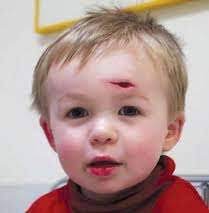
Parallel to all of this, other parts of my life were continuing. At some point I received a message. The message was simple “I’ve just completed a home visit and noticed the child has a wound on his head”. Later my social work friend and I discussed this experience in depth, we needed to. Because like Ricky’s shit stayed in my mind, the wound of this child stayed in the mind of my social work friend. This is what witnessing brokenness does.
I won’t bore you with all the professional ongoing responses that continue to unfold for both Ricky and the child. But in all of this, where are we to find hope? How can we hold onto hope? What is to become of hope?
In the last meeting about Ricky, I raised that very question on behalf of him really. “What can we do” I asked, “to ensure that Ricky has something to hope for”. It seemed an impossible question, but we managed to answer it. The worker from the LGBT organisation, we had previously been trying to link Ricky with, agreed to give him a phone call. A call that would let Ricky know he was being thought about that he mattered, that he had not been forgotten. In this very complex broken place, it was the one simple glimmer of light, the one hope.
The phone call, it was agreed, would not be a piece of work, it would not be an assessment. It would simply be a message of connection. Amidst all the inhumanity of rejection, all the repeated turning away. This simple phone call would offer a glimmer of light, I absolutely believe beyond any doubt that this act alone, provided a mirror for Ricky of his own essential goodness. It said to him that he is not defined by the worst of all he has done, or indeed by the worst that has been done to him.
Ricky, like every person I’ve ever spoken with within criminal justice settings has experienced a tragedy at some pivotal moment in their life. Every one of them was denied love and affection from a mum, a dad, their grandparents, an uncle, or someone else who they should have been able to depend on. I’ve come to learn in my work, in the many Ricky experiences I have witnessed, that every human tragedy stems from a person being denied real love at some fundamental point in their life.
Every person deserves to hear the words, “You matter; You are loved,” and to experience the this not only in words but in actions. We must not only witness the brokenness around us, but we must also act. Our actions must be about affirming the dignity of those who feel lost, forgotten, thrown out, and abandoned. Yes, on occasions this will also mean to clean up their shit and attend to their wounds.
Ricky’s brokenness started very early in his life. I know this because in his file there is a note written all those years ago by his social worker, “I’ve just completed a home visit and noticed the child has a wound on his head”.
Br Stephen Morris fcc