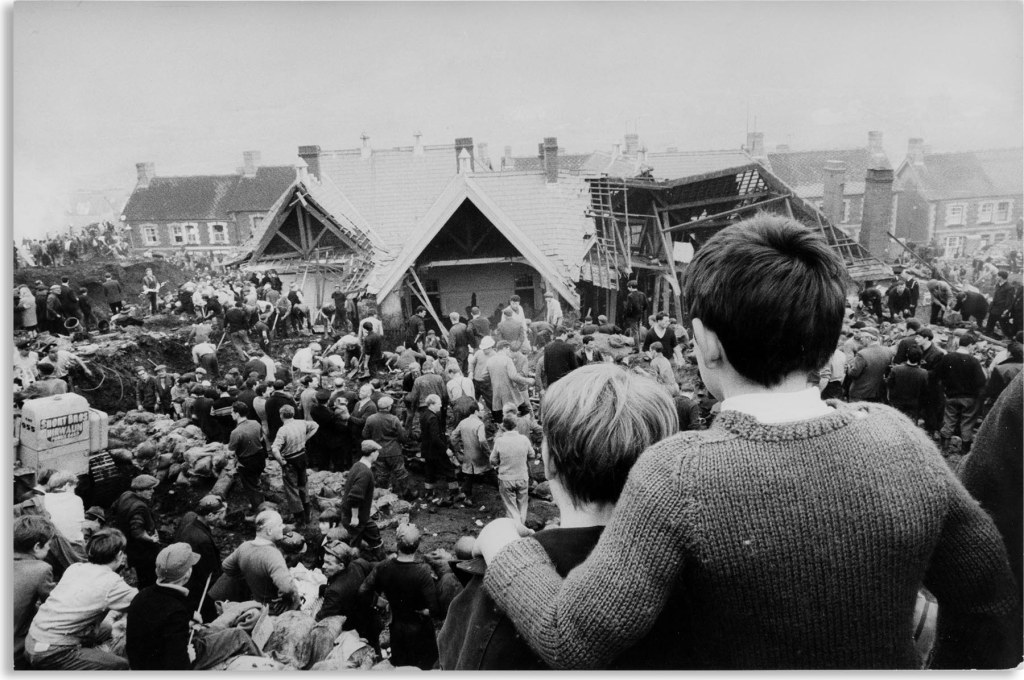
I didn’t realise at the time, but for me, the impact of the disaster that unfolded at Aberfan in the 1960’s set in motion of what has been a lifelong affinity with trauma. I guess it was the first mass trauma that I was old enough to understand. The first I could identify with as I was the same age as those children killed and my school looked just like the one crushed under the mountain of coal waste.
It was also the first time I could understand the injustices that soon came to light and that had caused it. The process of cover-up, denial and collusion all adding to the trauma. I did not know at that time I would spend decades as a clinician working with injustice and trauma – for me the two have been seldom separate.
I have now, in the years that followed Aberfan, worked with many individuals caught up in trauma of different kinds from the glaringly obvious as; Kings Cross, 7/7, Admiral Duncan and also the slow. slow, slow drip by drip trauma such as the war in Ireland, the AIDS crisis and in more recent times the increasing trauma’s linked to chemsex behaviour and crime. Although my involvement has been as a clinician, trauma involves me to the very core of my being, for that’s where we tend to experienced most.
Sadly, the term ‘trauma’ has become normalised, the word is banded around with little meaning. One of the consequences for this is that an authentic experience of trauma is then minimised, it not recognised for the havoc it causes and its debilitating effects on daily life. Trauma is treatable and can be recovered from but one of the most difficult barriers to this is that because of its very nature, everyone else knows the traumatic experience is over but the person having experienced does not know this. A radical new approach is needed in how we recognise trauma and how we respond to it.
Trauma is not only an individual experience it is also a collective experience. Couples, families, groups and whole communities can share in collective trauma, even when they have not been directly involved. The very nature of trauma is that it breaks through, it disrupts and invades all that we know to be protective and safe. In this process trauma has the capacity to disconnect, to separate and cause those suffering to feel and be regarded as other. From this disconnected place new vulnerabilities evolve as, often desperate attempts, are made to seek relief and reconnect.
Trauma cannot just be overcome and worked with in the consulting room. Healing and recovery from trauma needs to take place in the community, after all this is where it happens, this is where it is lived, and this is where it can be addressed.
I tend to know, without reading any reminder, the various anniversaries of traumatic events, even when I have not been directly involved. However, I often don’t know so readily the anniversaries of individual traumas that sit in the heart’s and lives of my friends. The fact that I don’t is a tragedy in itself. Until this can be achieved, much more is needed.
I will go so far as stating that in a connected community trauma is not possible. Genuine and authentic presence of connection provides a sense of security. It is a secure experience of attachment and a knowing that we are not alone which provides without doubt resilience. Resilience won’t stop traumatic events, but it certainly enables us to be survive in the face of them.
I am reminded of two people who were at the heart of the 7/7 bombings. Gill Hicks, who died several times and had both legs amputated and Aaron, a Police Officer who walked into a carriage and witnessed the vision of hell that he would never be able to remove form his memory.
Gill describes a childhood and experiences of community that were all we would associate with secure attachment, experiences of belonging and community.
Aaron’s childhood and life had sadly been the opposite.
In response to their experiences Gill never developed or experienced symptoms of any trauma, quite the opposite, she worked to achieve and created even more experiences of safe community. Aaron withdrew and community withdrew from him. In his isolation and loneliness, he developed a full-blown traumatic response. His pain and suffering hidden for a long time took much recovery.
The experience of these two inspiring people, the experience of those in Aberfan, anniversary after anniversary, are powerful reminders of the importance of connection and community. The role we all play in enabling connection and the role we all need to play in building resilience.
Br Stephen Morris fcc