My experience of ‘the sacred’ in life has not been found in the cathedrals, monasteries, friaries or parishes of the institutional church but most vividly, tangibly, in places more readily associated with darkness, mess, brokenness, pain and horror. Let me say this more directly; the prison landings, police and court cells in which much of my work takes place are the places where I often witness more compassion, concern and humanity than I ever have in the chronically nice religious institutions that also feature in my life.
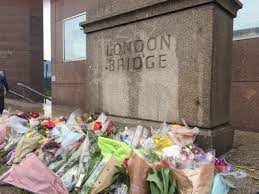
On Religious Brothers Day, I and my fellow brothers working in sites of suffering across the world celebrate the paradox of our place in the world and in so doing I recall an incident, a horror, that unfolded on London Bridge some years ago now.
Time and time again life, if we live it fully (for me living life as a religious Brother enables me to do just that) takes us into the uncomfortable territory of paradox. The point in the human condition where opposites come together and demand of us that we think outside of our comfort zones and with new perspectives. No matter how many times we are called into this process it never seems to become any easier. For more than three decades now, my daily work has provided me with this challenge.
I trained in forensic psychotherapist and work as Operational Lead for Project Sagamore for HMPPS and the Metropolitan Police. At the heart of forensic psychotherapy is the belief that all offences are a symbolic communication of something that cannot be said and that no one is ever just their offence. It is these tenets that I embrace when advising courts, parole boards and police investigations on risk, dangerousness and suitability for treatment.
In the context of my work, I have met many hundreds of men and women each presenting me with their own unique version of the paradox and in particular the paradox that sits at the heart of that which we would consider ‘good’, ‘bad’, ‘evil’ or ‘mad’. I am forever grateful to the men and women who consume my daily thinking and in so doing constantly challenge me to go beyond myself. Repeatedly, it is they who take me into the heart of the experience of the passion of Christ and at the end of the day the only certainty I come away with is that it is never clear cut. It is always paradox.
Paradox in the criminal justice setting is always hidden from public view. My work takes place in a separated, secret world. That fact alone acts as a constant reminder that I am connected to much that many do not want to think about. It is the stuff of life considered only on partial terms by a polarised media or distorted beyond recognition by the latest Netflix crime drama. It is also a world where there is much history of the crucifixions of life. Where contemporary versions of the passion are repeated and often with little evidence of any resurrection.
I could cite many examples that would enable me to share my work but none quite like that which occurred in the winter of 2019. A major incident on London Bridge propelled not only the paradoxes of criminal justice into the wider public’s thinking but also, and with little recognition of course, the very themes of the passion of Christ; forgiveness, wholeness and redemption.
The incident I refer to unfolded at a conference on rehabilitation. A radicalised young man launched a knife attack on two of those attending and killed them. As the violence continued it spilled out onto the bridge and others from the conference became involved.
In the media coverage that followed, two men were brought to our attention, both are deserving of our continued reflection. One is a man previously convicted of murder who, caught up in a new drama acts to save and preserve life. The other, a man who has committed his young life to helping change and rehabilitate similar offenders and who then loses his life at the hands of one he may well have sought to serve.
In the days that followed, the media found many words to express a response in relation to the later. But their struggle to find the language that could comprehend that someone serving a life sentence for murder could also be equally involved in the preservation and saving of lives was only too apparent.
In this example, it seems that extreme events are never really as extreme as we need them to be. We prefer ‘extreme’ to mystery. We know what to do with ‘extreme’. We make it ‘good’ or ‘bad’ and our small, limited mind can then cope. What our thinking struggles most with is the reality and fact of wholeness.
The fact that someone, that we, are forever a sacred mix of all that we easily label ‘good’ or ‘bad’ and that the resultant manifest wholeness is for the most not extreme at all. My understanding as a clinician of faith tells me that wholeness is not one or the other, it is always both. It is always a paradox.
The events on London Bridge made public the reality of the paradox within the human condition. For once, the very private world that I inhabit was revealed. Something more occurred, something more got played out for all to see and that something seriously is demanding more than our conditioned view of our world and each other. It is demanding we think beyond the initial superficial reaction and not be so afraid of ourselves and the mystery of what wholeness really looks like. Because wholeness is much more than we care to think about.
Wholeness also requires us to think about the third man who featured on the bridge that day. For it is he that brings into sharp focus the reality that none of us are ever a reduced to one dimension. We are all that incredible mystery of immense light, immense dark and many dimensions. At that moment in time, it is the third man who manifests the part of him capable of ultimate destructive behaviour. But, like it or not, that destructive moment is exactly just that, a moment. It is not the full picture and is certainly not the full reality or extent of who he is. The third man was once a babe in arms, just the same as the other two men. He will have also travelled through life being attached to and loved by others. Being seen and known for many things worthy of praise and respect and nothing like the part of him now witnessed by the world. He too, just like the rest of us, was a manifest paradox in much need of a manifest passion.
Br Stephen Morris fcc
(This article was first published in ‘Passio’ Lent 2021)
