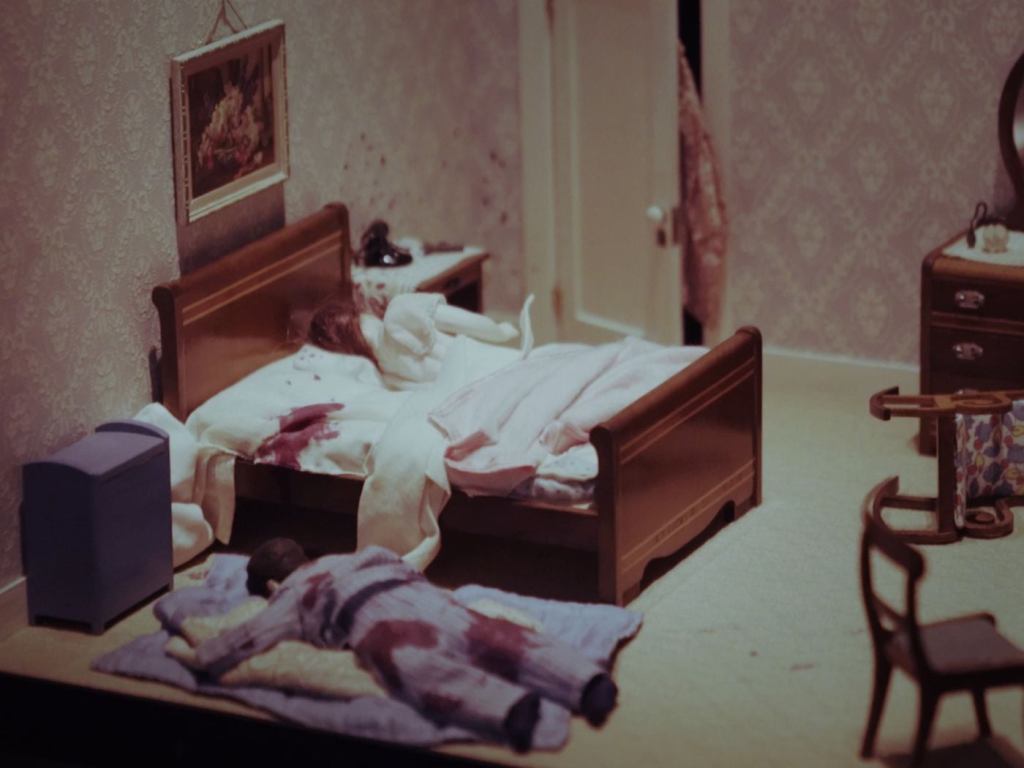
Murder it appears, is very much on our minds. The accounted escapades of Fred and Rose sit on the bookshelves of millions the world over. This not so cosy couple are joined of course by many hundreds if not thousands of others. Add to this the latest Netflix serial killer drama or another remake in the ancient tradition of Agatha Christie and it is more than clear, murder is popular. We can’t get enough of it.
On occasions and in sharp contrast, the very people who can and do recount with glee the antics of Ted Bundy, also take to the streets in their hundreds to mourn and weep over a murderer’s victim that they have never even met. When the murderer’s victim also happens to be young, white, professional and living in an affluent area, as was Sarah Everard, even the usually silent middle classes leave their comfort zones to express abject horror. In media interviews they utter her name ‘Sarah’ as if they knew her intimately, they didn’t.
Later of course they return to the next instalment of Bundy and will, I have no doubt, be amongst the first to purchase the paperback version of ‘The Killing of Sarah’ – the title won’t matter much, the seduction has already occurred.
Yes, murder is most certainly on our minds and in a way, which is so at odds with itself, so split in its manifestation and so contradictory that it is very difficult to know where to begin to make any sense of our paradoxical love hate relationship with it. This paradox exists within us all including those who murder.
Murder, always begins in the mind. Most murder occurs concretely only after it has been committed many times previously in daydreams, nightmares and fantasy. Much effort has usually been made to keep it confined to these realms, but it is usually a sudden internal change that occurs and the deed is carried out. Most of us in fact will have experienced the initial phases of this process. Therein is our sameness with those who kill. Media and public interest in the act of murder usually stops at this point and quickly moves to revenge and punishment. Failure to think beyond this point does not serve us well. It is this non-thinking that is most certainly a contributing factor to repetition and missed opportunities for public protection. In moving so quickly to punishment, we must ask who is it really, we are wishing to punish? The answer of course lies much closer to home.
Most men and women I have met who have killed are, contrary to what the media would have us believe, eager to exercise revenge and punishment on themselves. They have morally injured themselves and are therefore often more than willing to except justice.
In the distorted public frenzy that accompanied the murder of the young, blonde, professional middle-class women called Sarah and indeed the significant number since who were, for whatever reason not so popular. Something significant, although reported, got missed or dismissed.
The person charged with the murder of Sarah appeared in court with an obvious head wound sustained in custody and had, on two separate occasions, required hospital intervention. Such reports invite speculation. I however do not find it difficult to be confident that, on both occasions, the injury was self- inflicted. My confidence of this assertion is based on listening to people who have killed and learning from them, not so much of how they have behaved, but of their story and how what they have done impacts on them.
The full story of the victim in this case is not known. She was reduced to a moral crusade. The story of the man charged with her murder has been reported on endlessly. But fact remains, we do not know him at all. He, was reduced to a piece of print. The full story does however reside in his head and is fully known to him. It’s beginning would have started many years ago and each chapter will hold horrors to varying degrees culminating to the point where it could be contained no longer. Only now is the final chapter writ large in his mind and with such force that all he can do to manage it is to try to knock it out. Self-inflicted smashing of a head into the wall of a cell I have witnessed many times.
With murder done two things remain; the story that we think we know and the full story that has never usually been told. In relation to the later, there are usually many clues along the way. Many assume that the most awful thing about a murder scene in the murder itself, the dead body and signs of the deadly act. Not so. The most disturbing aspect of a murder scene or in fact most crimes scenes is their context.
So saturated are our minds with the stuff of crime drama that we are conditioned to expect crimes and crime scenes to unfold as they do on the screen. Even when art replicates real life, the horror is seldom at the point or location we expect it to be.
Murder and other crimes take place in the context of the ordinary. In the context of routines daily life and more importantly, in the stories of life that have been unfolding day by day across years. For me, and for many a person who has killed, the horror is in the whole story and not in the final chapter.
The very first crime scene I witnessed in the course of my work has stayed in my mind’s eye over several decades and is as vivid as it was at the actual time. But it is not of the dead women, laying on the floor in front of her sofa, the deep wound where an axe had almost split her head in two, that I see so clearly. It is her television set, her tea cup where she last placed it on a side table, magazines in a rack, coal in a brass bucket, a plate of uneaten sandwiches and the kitchen door slightly ajar. These ordinary things convey the horror of the extraordinary that had happened and in doing so connect me to the full story.
Listening to men and women who have killed, I am never left in any doubt as to the images that remain in their minds. A murder scene is what it is and is seldom lacking in clarity. Unlike the proceeding story, it can be made sense of, reported and told in its stark reality. For those who have killed the stark reality is much more than the murder scene. They will often have a life time of scenes, of chapters all leading to the final one. For those of us who work with them, our task is to learn, know and understand – the full story.
John had strangled his partners lover, who also was John’s closest and lifelong friend. I had seen close up photographs of the victims’ neck and the victim’s body in situ. But many months later, in a prison consulting room I was viewing a different set of photographs. John, with some pride, had brought a set of family holiday photographs to show me. All the characters of the tragic story were present John, his wife, their three children, the now dead lover and friend. They were all standing at the helm of a boat as it cut though the waves. They were setting out on a family holiday laughing and smiling. This photograph captured an earlier chapter in the story. The story of lies, deceit, betrayal, hurt, rage, it was all there but as the smiles indicated, it was a story that had not been told. Again, I experienced horror, not in comprehending the murder scene, but in the knowing of the earlier story and indeed its denial.
More recently in my role as Chemsex Crime Lead for London, I went to view evidence and discuss a case of rape with the chief investigating officer. The rape of unconscious men in the chemsex context is tragically not uncommon. This particular rape had been filmed. Yes, it was deeply disturbing to watch. For expert witness purposes, I had to watch it many times. But, as previously experienced, the true experience of horror was in witnessing the wider picture, the fuller story. Also, in the room with the unconscious man were six other males. Each man was scrolling through endless Grindr profiles on their mobile devices. They would glance occasionally at the sadistic crime unfolding before them but they did not intervene and neither did they express horror. This part of the story was familiar to them, they had witnessed it before and given the condoning lack of response this part of the story was acceptable to them. These men were not psychopaths, all were capable of feeling, reflection and ability to connect with another. But at that moment in time the wider story was not being permitted in their mind. It had been suspended and disconnected from. It could not bear to be known. I cite this as a powerful example of how the full horror only occurs when the full story is not only known but is also allowed.
There are rich lessons to be learned in all murder and crime stories, but we must be willing to hear the whole story and not just the final chapter. It was Jung who first called our attention to this fact when he stated in one of his letters to Freud that “The reason for evil in this world is that people are not able to tell their stories” I agree. But here is the rub; there is no point in telling your story if there is no one to pay witness to it. Worse still. if the witness is only interested in the final exciting chapter and disavows the rest .
As the illustrations I have used indicate, working with the real horror of murder and other crimes requires bearing witness to the whole story. Founded in solid Kleinian theory, every aspect of a crime, of an offence, is a communication. This truth, as a mantra, sits at the centre of my work. Actions and behaviour time and time again invite us all to ask what is being communicated?
In some ways by the time I and my colleagues are asking that question, it is too late. Would I and my colleagues still have a job if such a question was asked of all of us and more readily when we witness a communication? Would Jung’s assertion serve us all well if we noticed, listened to and witnessed the crucially important stories we all have and need to share?
Br Stephen Morris fcc
