On the Margins

Stories & spritual reflections from meeting those on the margins of society.

Category: Healing

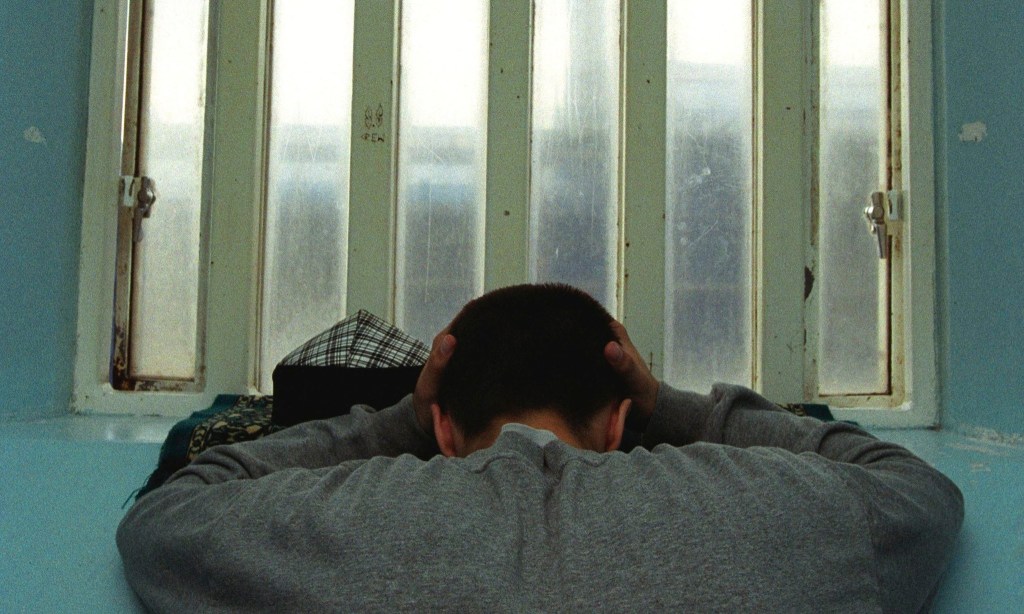
  • Being with guys who have messed up big time, to the extent that I am usually sitting alongside them in a prison cell, I’m reminded repeatedly of many things. I often write about those things to ensure that the more hidden experiences of life, the less the popular and often unwanted experiences don’t ever get forgotten and can be shared.

    Those I sit with are only too aware that at that moment in time they are far from popular, they are no longer wanted. There of course are few places more hidden than a prison cell.

    My writings reflect the common themes of these experiences; vulnerability, risk, searching, trauma and so forth. But there is one theme that is always present but seldom gets mentioned – Connection!

    Connection is something we all know about and know about it deeply within our psyche, within our hearts. Our first state is a connected state and it would seem, from the second that the midwife severs that connection, we spend the rest of our lives trying to restore it, trying to get it back and to re-experience that symbiotic state. If this tells us anything, it tells us that connection is a powerful experience. So powerful in fact that although we all desire it, we also fear it. We fear it most when the need for connection manifests in desperation, pain, suffering, grief, vulnerability and powerlessness.

    We willingly connect with joy, happiness, strength, certainty, gain and power. But these are experiences and states that are not constants. For some these are states that are never available, never present and even without the slightest hope that they will manifest or return. No, there are certainly some things – the ugly things of life that we don’t want to connect with.

    When faced with such immense need. When faced with experiences we believe to be outside of our own, there are few who just do not want not to connect. It is rather that we think we do not know how to connect, or that we won’t be able to connect, or that we have nothing to connect with. Faced with such perceived self-deficit, we become fearful, we disconnect, we withdraw, we close off, we run in the opposite direction and then of course nothing changes.

    Each time I walk through a cell door, I know I cannot give the guy on the other side what he most wants or needs. In that position, I am only too aware I have nothing that, at that moment in time, he will value. No wonder then I can be greeted with “Do one” or to be more accurate “Fucking do one. You cunt” or more politely sometimes just a simple “Fuck off”.

    The challenge then is always to still be willing to be available for connection beyond the mix of “Fuck off” and that knowledge inside me that “I have nothing”.

    You may not be literally needing to connect in a prison cell, but there are myriad’s of ‘prison cell’ experiences involving others we all come across and sometimes several times a day.

    The invitations we continually receive to connect will be for ever present – it is hard wired into us. My need for connection is no different to the guys I meet in prison and the same goes for you. Seeing ourselves in that need, however, wherever it presents, is where we start and where we no longer need to be fearful and turn away, even when every part of us wishes to.

    Br Stephen Morris FCC
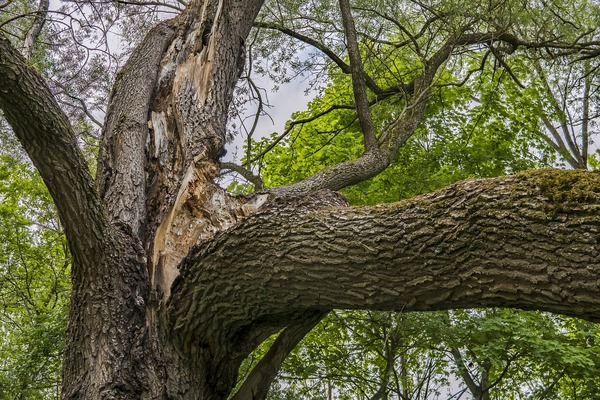
  • Throughout 2025, death by suicide, as reflected on below, continued to have a powerful impact on my life and most certainly on the lives of others involved. The marking of years does nothing to lessen such impact. In fact, far from lessening, as is often suggested, it increases. This truth is not confined to loss by suicide but to the experience of grief no matter its cause.

    I reflect again then on the experience of boughs breaking ….. and offer this for all those today who know the realities of grief that changes, that changes us but that never ends.

    The suicides by men I knew personally and professionally were five in total. Hardly surprising then for me to have need to process something of these losses in dreams. Our unconscious dream life serves us well.

    In the early hours of one morning, I was awakened by a powerful dream. In the dream I was looking at an impressive oak tree, its massive trunk bearing equally massive boughs and branches. Each bough looked strong, healthy, full of life. But as I looked my admiration changed to massive anxiety, fear even. The boughs were crumbling, disintegrating, coming apart and in a matter of moments they fractured and fell to the ground. The sight was devastating. The abundance of life that I had been marvelling at, was no more. I was not only deeply shocked at what I saw, but also shocked as I hadn’t noticed that all was not well.

    My dream was made even more powerful as whilst this drama of sudden decay unfolded, a woman was singing softly in the background the nursery rhyme ‘Rock A-bye Baby in the Tree Top with the haunting line “When the bough breaks the cradle will fall, down will come baby cradle and all”. With all the boughs now broken on the floor and the women’s haunting singing, I continued to look at them. One by one they morphed into the each of the men who had ended their own lives by suicide over the course of last year.

    My distress on waking did not need any clever psychoanalytic interpretation. Each one of the men who went out of my life last year and away from our world were extraordinary individuals. Each a massive presence. All, without fail, contributing something special, inspiring, creative and unique to those around them and their communities. We who knew them, knew that. We saw it. We witnessed it over weeks, months, years and we loved them for it.

    As in the dream and in reflection, clearly there was also much that we did not see, much we did not hear, much that was not revealed to us and much we chose not to know about. None of those five men I would have recognised or even thought about as vulnerable. I had never held them in my mind as not being anything else than the wonderful selves and all of what, like the oak tree in my dream, that they magnificently showed to the world. So, when just like the baby the haunting nursery rhyme they in all their vulnerability came crashing down, it was all heartbreakingly too late.

    Every parent will know, better than I, what it is to recognise the vulnerability of a new born child. The symbiotic gazes in early life are the skipped beating heart moments between parent and child where vulnerability alone is for the learning. The sacredness of parenthood. For me, not being a father, this experience has been outside of my call. Until this Christmas that is.

    Decades of Christmases have come and gone with me gazing on nativity scene after nativity scene. Blessing myself, as we Catholics do, in front of the alabaster baby Jesus’ ranging from cheap and tacky to the stunningly beautiful. But only this year did I notice the immense vulnerability of the baby in the hay, legs outstretched and arms reaching up. I noticed it as never before.

    My only response seemed like the only response possible. As we say daily in the Divine Office, it was to ‘bow and bend low’. From that position it was possible to enter into that specific manifest vulnerability of the new born child. From bowing and bending low I have found it possible to weep for and with all the vulnerabilities of the world.

    My dream however was a powerful reminder that pious acts before a nativity crib are one thing. The vulnerabilities unfolding daily in the crib of life quite another.

    For my five men who died, the question must be asked, where was there room for their vulnerability? Where could their vulnerability be recognised witnessed, met, valued? Why can we in symbiotic empathy enter with open hearts into the vulnerability of a child and yet not do so in relation to the same vulnerability when manifest in an adult.? Why as adults can we not value and venerate the very real vulnerabilities of our adult lives?

    Truth is, we do not grow out of our needs and vulnerabilities. We remain, in ways hidden by our adult self, always something of the vulnerable precious baby we once were. Truth is, when we don’t allow room for vulnerabilities, that of others and most certainly those of our own, then our ignored fragility comes with a very high price indeed. In life and for even the most magnificent of oak trees boughs break and do come crashing down. Oh that my dream may have a different ending.

    Br Stephen Morris FCC

  • Christmas does not offer us respite from reality. This truth was writ large in the middle of a chapter I was reading recently. It resonated. It’s hard truth stayed with me and eventually brought relief of the kind that so often only hard truth can do. On reflection, it is a truth that I have long known and am reminded of on an annual basis.

    My clinical role in recent years is sharply defined.I’m not required to work over the Christmas period. But throughout previous decades many Christmases were spent in responding to the forensic psychiatric demands in prisons, secure settings, A&E, police stations or in the back of ambulances. Each one a backdrop for unfolding events which proved many times over, for all involved, that Christmas does not, has never and will not equate with all that the tinsel, baubles, fairy lights and festive fare have conditioned us to believe.

    No matter how much we may have invested in its trimmings, the reality is that Christmas always has and always will sit in the middle of the mess of life.

    I shared in one event that stands out in my mind and has become, because of memory, an annual reminder of the hard truth of Christmas.

    In one of the large London prisons on a Christmas day afternoon, I received an emergency call in the middle of association to go the fours (4th landing). The scene that greeted me was a tangled mess of officers and prisoners doing all they could to release a prisoner from the ligature he had tied around his neck before throwing himself under the iron stairwell. His positioning was precarious.

    Four of the prisoners were trying to hold him up whilst the officers were trying to release him. Suddenly he was freed and brought onto the landing and laid on the ground. All involved surrounded him, not knowing what to expect, it was completely silent and that moment in time is fixed into my memory much the same as a nativity scene. But this occasion was not defined by new life, but by a new death. It was all too late. The prisoner was dead.

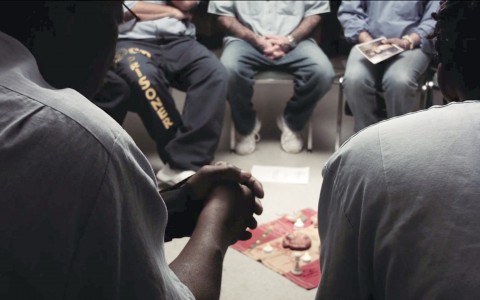
    Over the weeks that followed, I met with the four prisoners involved. We met together in an empty cell for an hour each week to talk about what had happened and importantly what it had left them with. It had taken all their strength over a considerable amount of time and at risk to themselves to hold up the man.

    Those moments of trying to hold onto life , which they all said felt like hours, they hoped that he would be ok and that they would have saved him. In the days that followed the reality of the loss of their hope did many things to them and that is what we talked about together.

    In the very last session and just moments before the end, in the poignant silence that often characterises the last minutes of a special experience, one of the prisoners asked a question and in so doing made a statement “But what about all the Christmases to come? We’re going to remember this every Christmas. Christmas is fucked”.

    Now in 2025 there are many of us in less dramatic circumstances who nonetheless, because of what life does to us, are able to identify with that prisoners’ statement of truth. Buying into any tinsel fairyland world does not serve us well. Failing to acknowledge that life is messy is,in its essence, the denial of our vulnerability and such denial always, always, always carries a high cost.

    In the midst of the pains of life, to engage in thinking that life will just be the same will set us up for not only massive disappointment, but also for massive trauma. Being in conflict with reality is quite literally a madness, a form of psychosis.

    There are voices of wisdom in our world trying to be heard amidst all the denial and delusion. The voice I heard that addressed this very issue by naming a hard truth was that of Pope Francis when he asked us to recognise that we can’t expect to live in a sick world without becoming sick ourselves.

    I still hold those four prisoners in great esteem, they taught me much. Yes esteem, for the heroic efforts they made on that messy Christmas day, but more so for what they were willing to do in the life that continued. In our little cell they named their fears, angers, hurts and vulnerabilities. In so doing, they accepted the messiness of that Christmas day, of life as it was in the moment and the life that was to come. In the hard truth of all of that they gained a wisdom, a knowingness that I am confident is still serving them well. In the mess of Christmas, we have the same opportunity.

    Br. Stephen Morris FCC

  • I recall this experience at this time each year. The only thing I change each year is the number of murder cases I have worked on in the previous months. This year the number increased yet again …

    Justice is not restricted to a single outcome of right or wrong, guilty, or innocent. My work teaches me again and again that justice is complex and operates in both external and internal realities. As a forensic psychotherapist my task is often focused on the later and means that, although a legal process has arrived at a conclusion, there remains, a much longer process to achieve an internal justice.

    For the offender, processing guilt, remorse, shame and taking responsibility requires much more than any judicial sentence could ever require. Enabling someone through this process is at the very heart of my work, it’s what gets me out of bed in the morning and often prevents me from sleeping all night.

    To say that achieving internal justice is hard is a total understatement and for many it remains impossible, they simply cannot do it and I certainly cannot do it for them. It has always been the most challenging aspect of my career. Now, more than thirty years in, that challenge remains.

    The challenge of my work is a revolving paradox. It is full of horror (murders, countless sexual assaults, rapes, many incidents of child abuse, bestiality, stalking, harassment, domestic violence, robbery, arson, stalking and suicides present on a regular basis). In equal measure my work is also full of inspiration (kindness, compassion, resilience, courage, hope, recovery, healing, and creativity). Each one of these features has characterised and shaped each day of my working life.

    I recall from a few Christmases ago that late on a snowy Tuesday evening I received a message that a bed had been found in a therapeutic medium secure unit for one of my most complex, troubled, and very young offenders who had become involved in chemsex, offending violently and repeatedly in that context. He was dangerous to others and himself.

    Medium secure care provides intensive therapy in a safe, respectful, and comfortable environment. When all else has failed, it is very much a last chance and so incredibly precious. It is also very much in demand. So much so that I often will not even begin the process of trying to access it for anyone as it usually impossible.

    Also, often impossible to achieve is the consent, motivation, and willingness of the client. For many, it just asks too much. On this occasion and in relation to this young man I did not know what his response would be. What I knew for certain is that I could not risk delaying him the opportunity and needed to go to him in person to try to get him to say ‘yes’.

    So, on an equally snowy morning morning, instead of Christmas shopping, I sat in HMP Liverpool with my ‘chemsex client’ and asked him if he would take this opportunity, this last hope, and to be willing to subject himself to daily therapy over two years and even beyond the expiry date of his sentence. A massive ask!

    This young man is not stupid, he has insight, capacity, and awareness. The mayhem of chemsex had over several years made it almost impossible for him to access any of those qualities. The madness of chemsex had diminished those qualities with repeated trauma inflicted on him and yes, by him. Repeated incidents of extreme violence, exploitation, abuse. Repeated incidents of vulnerability along with many episodes of paranoia and psychosis.

    His capacity for intelligence, insight and awareness had also been ignored and abused by so called professional services. One LGBT service who purports to work with victims of crime absolutely rejected my requests for them to work with him and address his victim experiences, instead they found it possible to write a report on him that was the most biased, damming, and judgemental report I have ever seen written on anyone in over thirty years practice.

    But back in HMP Liverpool and in spite of being written off by that so called ‘LGBT charity’ this young man, with awareness, integrity and hope said ‘Yes’.

    After agreeing and without prompting, the young man then went on to say, far better than I, why we should never give up on anyone, why access to internal justice is crucial and why, on occasions, Christmas shopping can wait:

    “I’m saying yes Stephen. I want to go as I know that if you just leave me to come to appointments by myself once I’m out, then I’ll come on the Tuesday, the Wednesday and maybe even the Thursday but on the Friday I’ll go on Grindr and by the afternoon I’ll be slammed up, I’ll be fucking for the next three days and then shit will happen and you’ll be putting me back in here. In this new place, in there, I won’t be able to do that, and I might kick off and threaten the nurses and bite them and all that, but I will still end up in the therapy session and that’s what I need and what I’ve wanted for so long. Will you come to see me when I’m there? and do you think when I’ve been there for a few months we could go out for an afternoon? And will you ring my mum for me and tell her I’m going to go; she will be smiling like mad when you tell her. I’ve needed someone not to give up on me and you haven’t and neither has Seb (his Probation Officer), tell him thank you, can you ring him and tell him thank you. Will they let me go there this afternoon?”

    Br Stephen Morris FCC

  • “The evolution of culture is ultimately determined by the amount of love, understanding and freedom experienced by its children… Every abandonment, every betrayal, every hateful act towards children returns tenfold a few decades later upon the historical stage, while every empathic act that helps a child become what he or she wants to become, every expression of love toward children heals society and moves it in unexpected, wondrous new directions.”

    The above quote by Lloyd deMause holds an immense truth that goes unheeded by a significant number and with disastrous consequences. Failure to recognise the abuse of a child or worse, to recognise it and collude with it, results in, as deMause indicates – repetition.

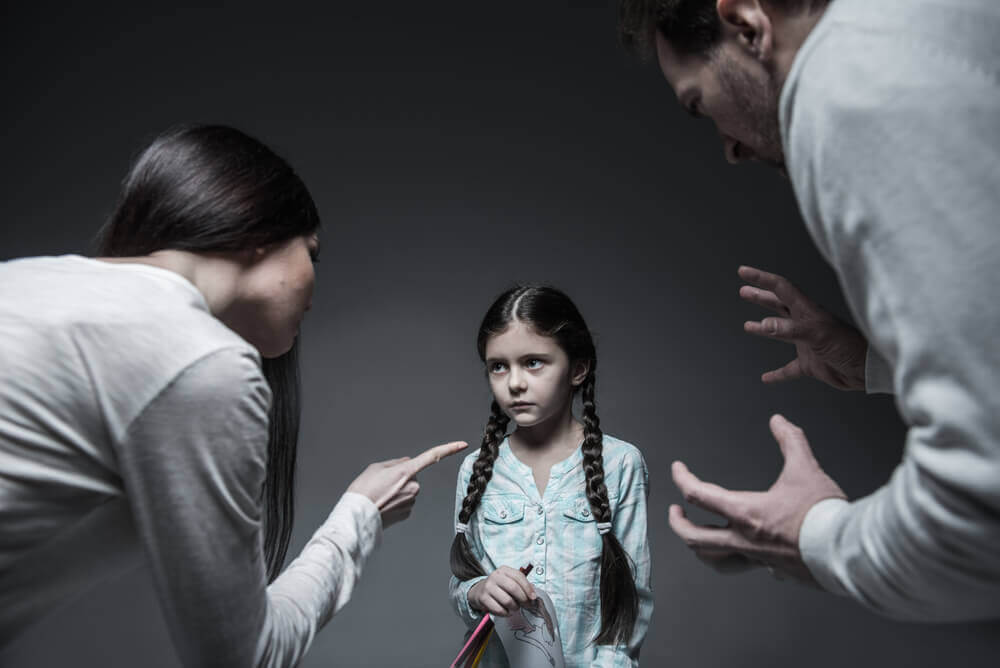
    Whilst sexual crimes against children are more widely recognised other abuses involving psychological and emotional abuse of children are not. Television programmes, adult comedy and often on FB, it is possible to witness repeated acts of the humiliation of a child for no other means than the ‘entertainment’ of adults.

    Even when the process of humiliation is staged, it serves to reveal the ability of some adults to engage in, collude with and support the objectification of children. To gain pleasure from witnessing the emotional distress of a child is sadism and needs to be considered perverse.

    Research tells us that repeated humiliation of a child is even more psychologically damaging in the long term than sexual abuse. Yet when such abuse is challenged it is often met with derision or dismissal. The fact the FB does not have a category to enable psychological abuse to be reported is an indicator of how collusive adult society remains in relation to the abuse of children.

    It was not that long ago (1980’s) that I, as a young clinician, when pioneering the need to recognise child sexual abuse, along with others at the time were totally derided. Many attempts were made to silence us and discredit us. In relation to sexual abuse, that thankfully would seldom happen now – we all paid a cost but it was worth it.

    However , It is woefully tragic and an indictment on adult society that other abuses remain acceptable by many. So, as in the 1980’s, children need voices that will not be silent. The issue of the psychological and emotional abuse of children is demanding the same. There is now in 2023 every need to speak for and voice for the voiceless – we must ! The cost of silence is ignorance and more, made clear in this closing quote from Alice Miller;

    “It is not true that evil, destructiveness , and perversion inevitably form part of human existence, no matter how often this is maintained. But it is true that we are daily producing more evil and, with it, an ocean of suffering for millions that is absolutely avoidable. When one day the ignorance arising from childhood repression and humiliation is eliminated and humanity has awakened, an end can be put to this production of evil.”

    Our prisons and probation departments are full of adults caught in the cycle of abuse always, always, always defined by shame and humiliation. I see and hear their stories everyday. It is a powerful reminder that I am privileged to have a role in breaking repetition. No matter how many times I’m invited to repeat that shaming and humiliation, I always resist. Yes, that invitation can come from those who are its victims, often it’s all they know. But more often it comes from others, the wider public and even at times other so called professionals. It also can come from political figures who want to name and shame or view broken lives as a “lifestyle choice”. How perverse and inhumane is that!

    Truth is we are all responsible for breaking cycles of abuse. By our shared humanity, we are all called to not repeat shame and humiliation. We are all called to live our lives awakened and not to repeat the evil that is shame and humiliation.

    Br. Stephen Morris FCC

  • Darkness has been on the agenda this week. With the changing of the clocks we lessened it in part but also increased it . This manipulation of nature only works for a short while, in a few weeks, darkness will take us all into its experience.

    Yes, the days will grow shorter. Seldom is the process of equinox met with joy. This year, much like last, our journey into natures darkness is occurring alongside a range of dire warnings that could make even the most optimistic want to cling to the dying light. There is however every reason not to despair. Darkness, if we dare to go beyond our dread of it holds much for us.

    The themes of light and darkness feature large in the living of faith and at times in associated celebrations. Our attention is drawn to this fact at this time of year more than any other. The equinox itself is an invitation for us to think differently and consider developing a different relationship by which we favour and value the darkness just as much as the light. It is the Pagan, or in reality not so Pagan, festival of Halloween that puts this particular paradox firmly on the agenda.

    The symbolic significance of Halloween for people of all faiths and spiritualities can easily get lost in its commercialisation. In addition, misunderstanding of the festival has also done much to distract us from its real meaning. From ancient times until now Halloween invites us to recognise that this is the time in the cycle of the year when light and darkness are balanced., Halloween occurs within this annual period which, for us all, heralds’ transition.

    All Hallows Eve, as Halloween is also known, proceeds of course All Saints Day, a time when we in the midst of life pause and remember those who have died. Across cultures and faiths Halloween and its position in the cycle of the year once again presents us all with the paradox experiences of night and day, light and dark, the life and death experiences at the heart of every faith. Indeed, at the heart of every life.

    We often deal with experiences of paradox by choosing or favouring one or the other, it is our biggest mistake. Our failure to go to the middle ground, to bring the oppositions together always takes us into conflict. Yes, we avoid the struggle and yes, we create a comfort zone and preferring such over an opportunity for faith tells us, we miss out, we miss the point and we miss the opportunity for faith to teach us and enlighten our lives.

    With Halloween putting darkness onto the paradox agenda in the particular way it does, it reminds us we can take a different approach. Rather than banishing the approaching dark season we can start to think of the approaching winter as an important time for our experience of faith and our struggles with life.

    Darkness is the winter of the soul, a time when it seems that nothing is growing. We also know that winter is the fallow time of the year. The time of the year when the earth renews itself. It is also exactly this process which sits within struggle. Unbeknown to us, struggle is the call and the signal that we too are about to renew ourselves. Whether we want to or not.

    Halloween and its ancient symbols remind us to reflect on aspects of life we would often rather avoid. Darkness like winter we think holds nothing of promise. But faith, once again via the experience of our struggle with paradox, tells us something different. Faith tells us that the approaching darkness of winter is a lesson about the fine art of loss and growth. Its lesson is clear; there is only one way out of struggle and that is by going into its darkness, waiting for the light and being open to new growth. That sounds of course like the very last thing we would want to do. Faith as always tells us different.

    This Halloween like all those gone before from ancient times until now is, as ever, occurring at a time of struggle. 2025 does not in fact have the monopoly on struggle, or on faith. Throughout our ages, struggle is what forces us to attend to the greater things of life for ourselves and yes, at times for others.

    Day after day in the prison and probation service I and colleagues are confronted with lives at their barest, we are presented with people’s pasts shaped by the harshest of the winter of life and the darkest of nights. It is often an act of nothing but faith when we give the message that the task is to begin again. An act of nothing but faith when we ask the men and women we work with to take the seeds of the past and give them new growth. But over time it is faith in humanity that enables us to see that indeed, given the chance, people do.

    So as the ancients believed that Halloween was the time when the boundary between opposites was thin, we too can, for those we work with and for ourselves, recognise that it is growth that is the boundary between the darkness of unknowing and the light of new wisdom, insight, vision, new life.

    Faith tells us that life begins on the other side of darkness. That life does in fact begin again after the particular winters of life, after the losses, rejections, the failures. Life goes on. Differently, but on.

    After darkness we are never the same again. We are only stronger, simpler, surer than ever before that there is nothing in life we cannot survive, because through life and its changing seasons are come to accept that life is bigger than we are and in it we are meant to grow to our fullest dimensions.

    As Og Mandino says of darkness and light “I will love the light for it shows me the way, yet I will endure the darkness because it shows me the stars”

    Br. Stephen Morris fcc

  • A friend has made a film, its him talking with a friend of his who is dying. He’s posted it and I may have shared it, I don’t remember.

    Right now, I don’t want to check that or even attempt to share it again because, since I watched it, I’ve remained with it, it’s been with me and I don’t want to disconnect with what it has given me, what it has connected me to and how it is still speaking to me.

    The film is about a life and life, it’s about things that don’t get talked about, it’s about lived experiences and depths of pain, longing, despair and madness that nearly all the time we push away and do so in a million of ways and for most of our lives, until we reach the moment where, as in this film, all the pushing in the world does not make it go away. Most of us don’t know what happens then, for me, my friends film is about that moment.

    The two men in this film and in the situation which life has visited upon them, as it will do eventually with me, are doing something radical and revolutionary in the face of it and I don’t know if I will or can do the same.

    In a very calm almost understated way and with great dignity they are talking about it, they are being with it, they are naming it, they are sharing it. They are not pushing away, its horror, its pain its madness and they are allowing it to be lived.

    Several times whilst watching the film I wanted to stop, I wanted to fast forward, it was uncomfortable, it brought back memories and it was painful and I cried and I hurt. But as I allowed it, as I didn’t push it away, something else started to happen and only in writing it now can I name that.

    What started to happen was not what I expected and the words that eventually came to me to describe it, were even less expected and to the point of shock…. here are those words …

    ‘The peace that passes all understanding’.

    That’s what happened.

    A depth, a breadth and an overwhelming sense of peace beyond my understanding and transcending even the ‘religious’ type language my simple mind resorted to describe the experience.

    I have had this experience only once before, many years ago, in the home of two very young friends, both were dying and both were naming it, not fighting it, not pushing it away and both were living it. Their home previously filled with the conflicts, despairs and pains of life was transformed into an experience of a peace beyond understanding, I remember it filling the air, in every room and over days and throughout long nights. Even having experienced that whilst still very young myself, I still chose to forget it, to push it away, until now.

    I’m not sure what I will push away today, I’m not sure what I will chose not to name, or not to talk about today. I don’t know what life will visit upon me today. that I will deny or seek to avoid and self-medicate as so often before. Right now, all I know is my friends’ film and his friend, who is now at peace, are inviting me to do something different. I love you David and I love you Stephen, even though I never met you Stephen, and thank you both for this experience of peace.

    Coda: Since writing this peace, David has also died and in a way which he decided for himself. I can only hope, can only pray that, for him, it was not an act of pushing away but an embracing of a peace that the world could not give… Sometimes I guess it is like that.

    Br. Stephen Morris FCC

  • I’ve experienced enough madness in my life and work to confidently recognise that its main causal factor is when a significant experience that we know to be real and true is denied by those around us.

    When our reality is not witnessed or affirmed it can take us into the realms of insanity. If you said to me each day that the sky was not blue it was brown and if those around remained silent and did nothing to affirm my reality of seeing it was blue, I would eventually become very mad indeed. This process is often experienced by those who have been abused in one way or another. No one witnesses it, those around do not believe it, the perpetrator denies it, then the impact of that over time is madness.

    Activists and those who work for truth and justice can also be vulnerable to such damaging levels of denial. If you are saying something that others do not want to hear, if those around you cannot tolerate anything other than their own agenda, if the truth of your message is uncomfortable then, again and again, you will be confronted with the negation of your experience, belief, identity and value.

    Whatever our cause, what we all require to keep us sane is a reliable witness, someone who is able to say’ you are right, I hear you and I get it. An effective witness enables us to recognise that when we have been made to feel insane, it is often because we have named something, revealed something that others with to think is unthinkable. These moments, rather than being silenced by self doubt or allowing ourselves to be convinced of insanity, are in fact moments when we can be reminded that madness is in fact very intelligent.

    Being witnessed and being a witness for others is a powerful reminder that we are not in this world alone. To experience both is a privilege indeed and often the very light that we all need.

    Br Stephen Morris CJ

  • I have often worked with someone in therapy for several years. The standard was always three years, these days many are looking for something much quicker, it’s a clinical dilemma. But regardless, the end of any process is a delicate time. Freud prepared us to expect the ‘negative therapeutic reaction’ a period where the issues presenting at the start of therapy appear to have returned. More commonly, I have observed, is a reluctance to leave.

    Many patients over the years have echoed to me, in one way or another, Guillaume’s profound poem ‘Come to the Edge’. So much can be understood from it about the human predicaments of dependency, attachment, individuation, separation, liberation. In therapy, all must be allowed and respected.

    But life is an edge state. An uncertainty. A doubt. Further in, may feel safe, appear safe, sound safe, but seldom is it living. Too safe, is no life at all. No, life is an edge, it’s where we learn to fly. And yes, on occasions we do need someone to do the pushing

    “Come to the edge,” he said.

    “We can’t, we’re afraid!” they responded.

    “Come to the edge,” he said.

    “We can’t, We will fall!” they responded.

    “Come to the edge,” he said.

    And so they came.

    And he pushed them.

    And they flew.”

    Br Stephen Morris fcc

    Like

    Comment

  • A very prestigious awards ceremony has just taken place. It happened at the Dorchester Hotel in London. I know about it because I have only just, in the early hours of the morning, returned from it. I had no option but to attend and I have thought long and hard about the wisdom of my sharing this but, given that it won’t receive any other publicity, I feel compelled. It was you see an award ceremony held in my name. It was ‘The Stephen Morris 2024 Resilience Awards’ and what a night it turned out to be!

    More accurately; what a dream it turned out to be! I have literally just woken from the above dream. I don’t remember my dreams very often. When I do it is because they are significant and usually indicate that my unconscious is serving me well.

    At the awards ceremony, I was presenting the awards myself. My role was to call onto the stage from the vast audience those being honoured for the role they had played in causing resilience. I called their name and described their particular contribution. I handed them the award and they all formed a long line across the glamorous and sparkling Dorchester stage.

    What a line-up of complete bastards filled that stage. For each person present was someone from my life who, in one way or another, had visited upon me some form of immense sorrow, sadness, hate, abuse, mistreatment, accusation, bullying, lying or other form of less than kind treatment. Others represented situations or occurrences that at some point in my life had taken me to the depths of despair; loss, illness, depression, anxiety. From childhood to the present day, the complete shit shower was all there.

    One by one they were all handed their award and one by one I thanked them for making me what and who I am today. For providing me with the insight, wisdom and knowingness that helps me each day to stand and face with resilience any new award seeker who may come my way. Sometimes, it would seem that there is an endless supply.

    I woke from the dream amused and disturbed. Most of those at that ceremony were people I, for good reasons, have chosen not to have an ongoing part in my life. It was not nice to see and hear them again. It was scary, anxiety provoking and yes, painful. But of course, I cannot deny that their awards were anything less than genuine. That the consequences of their past behaviours and being in my life have been anything less than authentic. To deny that would be to deny who I am today and I am very happy with exactly that.

    Would I have ever imagined ever giving each of the shit shower an award? No! of course not. Only in my wildest of dreams!

    In and at the time of our adversities, our endurances, our storms, our shit showers, our sufferings and our unwanted experiences, it is almost impossible to know what will be left for us and of us once they end.

    Only with hindsight, reflection and a willingness to know our history can we begin to recognise such. Having survived, something unimaginable emerges. Something beyond the awfulness is born, shapes us and enables us. That something I know now for certain is, resilience. Difficult to describe, to see or hear but powerfully present in its experience and in its residing.

    Would I want a repetition of the experiences that I have seemingly just awarded? No. Do I value and need my resilience? Yes! Yes! Yes! Such is this paradox of my life. Your life. I guess you too can have an awards ceremony and I guess that it won’t be very different from mine. If ever there was a time to have one surely, it is now!

    Br Stephen Morris fcc