On the Margins

Stories & spritual reflections from meeting those on the margins of society.

Category: Inspiration

  • Talking difference can be exhausting, it can wear you down and wear you out! Here I share some reflections that can help us to keep talking …….

    ‘Talking Difference’, these two words convey so much. At a deeply personal level I know I have spent much of my life doing just that – talking difference. Many others reading this will have had the same experience and in a myriad of different ways. Our lives are not all the same. It is our many uniqueness’s that make the world we inhabit rich beyond measure in its diversity and creativity. There is much to recognise and celebrate when we talk difference.

    Talking difference is also for many a very specific experience. There are contexts of life that can make difference a day to day struggle. When a particular context values one way of being, identity or culture as preferable over another then such valuing can often and does render anything different as devalued, rejected, unacceptable, less than. When life is lived outside of the accepted and valued then, as well as being characterised by difference, such an experience of life is characterised by struggle. The struggle is often manifest in the struggle to have a voice. A voice that is often required to address assumption, denial and sometimes hatred.

    I came out as gay when I was in my early teens. I’ve been coming out ever since. Having initially thought of it as a ‘one off’ thing to do, life soon taught me that the process is never ending. Like many, that difference is not the only difference that makes Br.Stephen Morris who he is. I sometimes also need to come out as being Irish, people are usually more shocked about that! These two aspects of my identity have required me to have a voice and often to struggle to have that voice heard. When talking difference is a daily experience because of who you are in the world it can be tiring, literally exhausting. It requires resilience.

    If two ‘coming out’s’ were not enough. I have a third. I often need to come out as a Franciscan Brother, especially when my work does not permit me to wear my habit. Coming out as a consecrated Brother requires me to have faith and it requires me not to lose heart. We are all in some way engaged with the world and its many discouragements. So we are all required to have faith in something and not to lose heart. I’m not alone.

    If you are concerned about the environment, equity, the welfare of refugees, social justice and those we work with, it is very easy to lose heart. Recognising the very real risk of losing heart poses the question; how do we not let ourselves spiral downwards into hopelessness? or, if we’re finding ourselves going downhill, how do we pull ourselves up?

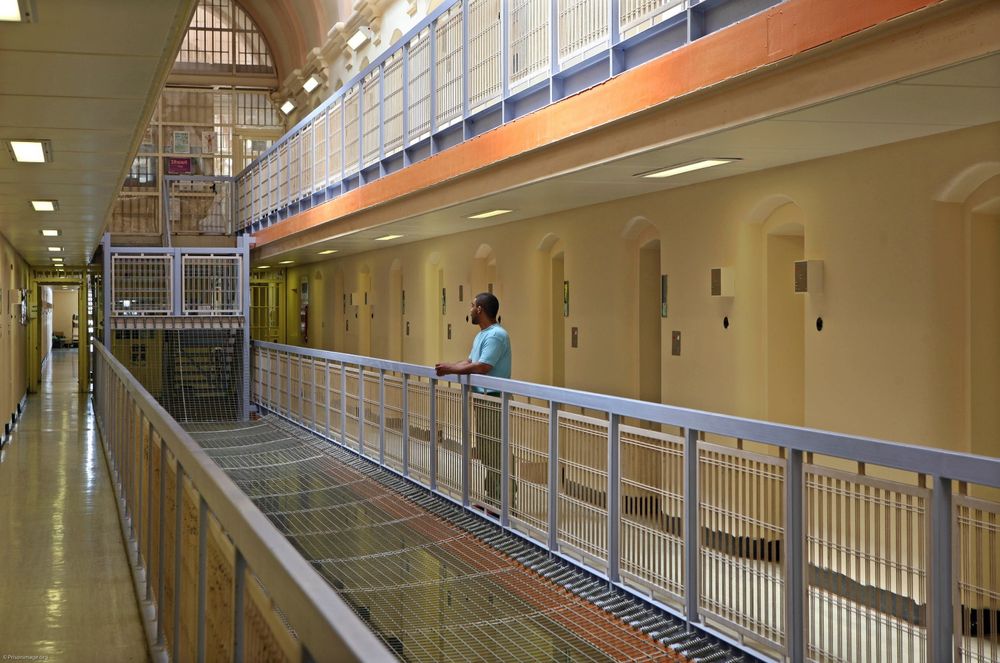
    Well, having faith helps but, faith alone will not change anything. Not losing heart requires action and thankfully that is something we can all do. The reason we may start to lose heart is that we allow ourselves to get hooked by our emotions. No matter who the target of our emotion is, it’s usually someone or some situation that hooks us. Once we get worked up we start to lose our effectiveness. We lose our skill to communicate and in so doing we lose our ability to do the one thing that is most often within our reach – to uplift ourselves and those we encounter. We can observe this process times over in the interview room, on the prison landing and of course in the many different areas of our own lives.

    When we fall onto the hook of our emotions; anger, resentment, whatever, we disconnect, we start to go a little unconscious. So, the first step of not losing heart is to become aware of when this happens. Once we are hooked we lose our sense of everyone having the same vulnerability, of the shares human desire to know happiness and avoid pain. In this cut off state we can fail to recognise the basic goodness in people and within ourselves. Becoming more aware of when our emotions get in the way of connection, keeps us conscious and from that place we are more able to see and experience the wider picture which is seldom a complete reflection of our emotions.

    When we are losing heart because of our own struggles in life, one of the best antidotes is to put things in a bigger context. I always find it a profound moment when, after listening to a service users account of their offence and often horrendously destructive behaviour, they stop and looking directly at me say “but I am good person”. I always experience that as a plea. A very human request of ‘now you have seen the worst me, please also see the best of me’. Seeing the wider picture, no matter what they have made me feel, is crucial if I, if we, if they, are not to lose heart.

    Widening our perspective and becoming more conscious individually also has a positive effect on wider society. It can have a massive impact on our ability to embrace and value difference.

    When we are continually faced with aggression, violence, greed, injustice, insensitivity to another’s pain the invitation is always to close down, to polarise and in that process lose heart. These experiences, can if allowed, take the ground from under us and if we’re not careful we too can find ourselves not caring, not connecting, losing faith in others and in ourselves. It is in these moments of vulnerability that the task is to remember how everything we do matters and that includes talking difference.

    Talking difference from the vulnerable place of being fully conscious can help us stand tall and resilient without resorting to defensiveness, striking out, closing down or polarising. One less person doing that in the world is going to make a difference.

    One more person taking a wider perspective and being willing to see beyond all that which would make us want to turn away, will make a difference. One more person having faith in our own and others basic goodness wont suddenly remove all that which would make us lose hope and neither will it suddenly make us certain.

    Constant certainty in the work we do, with others and on ourselves is seldom, if ever, possible. But the opposite of faith is not doubt, it is certainty. So, it’s absolutely ok not to feel certain when we talk difference. A lack of certainty does not stop you or me from, in faith, making important contributions to the world. If that means talking difference then there is every reason for us to start to practice not losing heart and …. to keep talking.

    Br. Stephen Morris FCC
  • It’s not unusual for me to receive enquiries from people interested in working in the field of crime and criminal justice. They often ask with great excitement ‘what do you do?’ ‘what does your work involve?’ Their excitement often visibly diminishes when I explain:

    “It involves approaching what I find repulsive, helping the ones I think I cannot help, and going to places that scare me”.

    My explanation is spot on, truthful and does indeed reflect the reality, but they are not my words. They are me owning the wise words of Pema Chodran in exhorting us all, when faced with the chaos and darkness of life, to live more fully, more humanly and more courageously by; “Approaching what we find repulsive, helping the ones we think we cannot help, and going to the places that scare us”.

    Her words also explain my absolute admiration for all those I have worked with over the years who, despite having done terrible things and scared others in the process, are willing to go to the places that scare them. They, of all of us and Pema, know that those places are always, always, always, within ourselves.

    You don’t need to work in prison, probation, police or secure hospital and you don’t need to have committed any crime to also respond to Pema’s encouragement to, when faced with the chaos and darkness of life:

    “Approach what you find repulsive, help the ones you think you cannot help, and go to places that scare you”…. Then the task is, to see what happens.

    Br Stephen Morris fcc

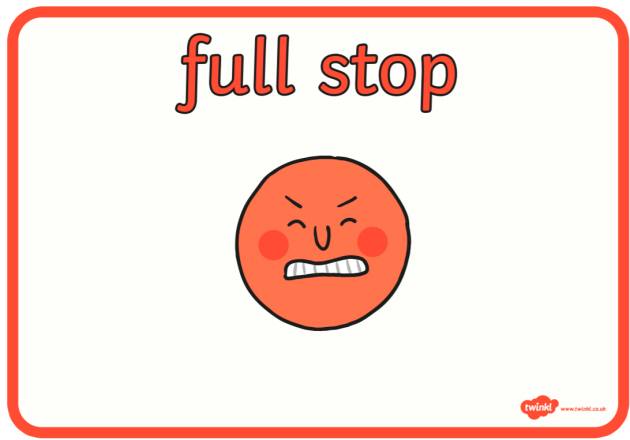
  • I am working with six people at the moment where, directly or in some other way, all are telling me; ‘I’m not sure how much of myself is real anymore’. It takes a lot of humility for that statement to be made. But in prisons up and down the land, custody suites and courts, it is something I have often heard. It is perhaps among the most useful realisations anyone can ever have. The tragedy is that it often takes an experience of prison, or some other ‘full stop’ in life, to cause the issue of the false self to be recognised and spoken of.

    To just be ourselves is not easy anymore. All forms of media tell us where to go, what to do, to buy, to own and how to look. The process of getting, hoarding things and hiding things in order to meet these demands and create a public image smothers life even before it starts. When enough is never enough, happiness is always just out of reach and unrest is pervasive.

    It is often the search to get enough that ends up for many in prison and if not the brick and mortar kind then one of our own making. As Sr Joan Chittister reminds us; The truth is that too much of anything erodes its essential power. Too much partying leads to a loss of concentration. Too much travel leads to exhaustion. Too much make-up distances us from the glow of the natural. Too much self-talk identifies us as narcissists. Too much posturing, too much affect, too much drama leaves us clown like and alone on the stage of life. There’s no one to talk to because few are really sure enough who this person is to risk interaction.

    Indeed, too much of anything robs us of the rest of ourselves. It cuts us off and separates us from others. But of greater concern and pain it also separates us from ourselves.

    So, when someone at the start of their work with me is able to state they no longer know who they are, it heralds the start of a challenging process in which pretence in its many layers starts to fall away and a more real authentic person emerges.

    The falling away process nearly always involves the letting go of complexity. The letting go of everything that we have invested in to meet the need of ‘enough’. Only to find that, as we shed it layer by layer, it has only covered up everything that we always ever had. So, although at the start the falling away is feared and experienced as loss, it really is a process of much gain.

    Being simple in our place in the world and by not playing at being anything we are not, we start to be all that we have always been. If we are content with less than the latest of everything, we cannot be frustrated by the fact that others have newer, better versions of anything. If what we have does everything we need to have it to do, why bother to want it to be bigger and better?

    Importantly, if we are content with who we are, we can’t be insulted by anybody. Nor then we will doubt or despise ourselves. We will know who we are and what we are and what we are not. Being content with our reality frees us from self-aggrandisement and from our false selves.

    Living a more authentic self enables us to take life more as it comes. It relieves us of the burden of the superfluous, the inauthentic, the masquerade and brings us closer to the best we have to give to the world.

    Enabling ourselves and others to become free of the many prisons of the false self takes courage and more. It requires commitment, determination, a letting go and a saying ‘goodbye’ to all and sometimes ‘goodbye’ to those that played a part in enabling a covering up of authenticity. We tend not to like the ‘full stops’ of life because we fear the losses of ending. But ‘full stops’ are also often the very point where new things begin.

    Br. Stephen Morris fcc

  • Many of my posts are concerned with those who are in prison. Prisoners and their families have been part of my life across four decades. Much of that time was taken up with Irish political prisoners serving sentences in the UK. It was a very challenging period of, what is now considered, ‘history’. To put it mildly, I was not a welcome figure in the eyes of the British authorities. In those dark days my work was dangerous and costly. I learned much about caring for others and the depth of both pain and commitment in the lives of the oppressed.

    Ironically, I also learned much about caring for myself and ensuring my own spirit would never be broken. Crucial in that process of self care is maintaining connection with others who share the same vision and commitment to achieving change.

    Throughout my life I have indeed had those people present in my life, I would not be here if I had not, of that I am certain. This is no different today. Such work, work that takes place on the margins, places us again and again into the heart of vulnerability, both that of those we connect with and of course our own. In the face of that there can be no compromise of care for others or care for our own self.

    I have a massive archive of my work from across the years. Today I was sorting through hundreds of prisoners letters and came across a quote from Thomas Merton that Sr Sarah Clarke and Gareth Pierce sent to me over 30 years ago and at the point when every prison in the country closed their gates against me and appeals for re-trial had been rejected. These words helped me then and reminded me that activists of all sorts also need support and encouragement. I share them now that you too will be encouraged …..

    “Do not depend on the hope of results. What you are doing, the sort of work you have taken on, essentially a work totally for others, you may have to face the fact that your work will be apparently worthless and even achieve no result at all. If not perhaps results opposite to what you expect. As you get used to this idea you start more and more to concentrate on, not the results but on the value, the truth of the work itself. There too a great deal has to be gone through, as gradually you struggle less and less for an idea and much more for a specific people. The range tends to narrow down, but it get more much more real. In the end it is the reality of personal relationships that saves everything…… the big results are not in our hands, but they suddenly happen, and we can share in them. But there is no point in building our lives on this personal satisfaction, which in life may be denied us … it’s not that important. if we can free our self from the domination of causes and focus on the truth we know, we can achieve more and more and not be crushed by the inevitable disappointments, frustrations and confusions.”.

    Br. Stephen Morris fcc