‘The Fall’ is one of those TV dramas that many revisit and of course it’s invitation to have murder in mind. …..
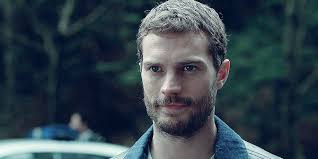
James Dornan, the immensely talented Irish actor, will forever sit in the mind of many as a serial killer. A lasting impact I guess, of the unrelenting intensity he conveyed in his portrayal of Paul Spector via the awesome production of ‘The Fall’.
Just as the books about ‘Fred and Rose’ flew off the shelves in their millions, so too does the darkness of ‘The Fall’ appeal to a society which still struggles to really comprehend the capacity of the human condition for the vilest of offences. The only way it seems that we can get our heads around the fact that the human condition can be murderous is to convert it into entertainment.
As long as we place the dark capacity of the human condition into a book, painting, play, poem, dance or TV series, especially one as good as ‘The Fall’, then we can keep all our primitive darkness, murderousness, perverse desires, violence’s, rages and destructiveness separate, away from us, unintegrated and, just as dangerous as the serial killer does, ‘split off’.
Evidence of our need to ‘split off’ our capacity for primitive violence is also expressed by many who conveyed their surprise at how handsome, sexy and good looking was Paul Spector. Such comments, and they were many, reminded me of the very first group therapy I facilitated for men who, like Paul Spector, had raped and murdered.
In the weeks leading up to starting the group myself and my co-clinician met with about fourteen referred men to carry out individual assessments to see if they were ready and suitable for intervention. We needed a group of no more than eight. Over several weeks we divided up the men and conducted the assessments on a one to one basis. My co-clinician and I shared an office. I remember well him returning after conducting one assessment looking red in the face, slightly energised and unsettled but grinning all over his face. He noticed my immediate curiosity, sat down and said to me “Oh my God! that one was absolutely gorgeous”, We laughed long and loud.
Murderers, rapists and especially serial rapists are not meant to be ‘gorgeous’ and certainly not sexy. The fact of course is, that there is absolutely no reason why they should not be and, having met many, I can evidence that many are indeed ‘gorgeous’. The issue for the forensic setting, for the wider community and my co-therapist, is not that they cannot be ‘gorgeous’ but that we should not be seduced by it. Gorgeousness and dangerousness are not as incompatible as we like to think.
I loved the fact that Paul Spector was not only sexy, he was also a bereavement counsellor. What a great role for us and for him to fulfil the task of ‘splitting off’. Both, accurately fly in the face of the monster we need him and other men and women like him to be.
My business is public protection, working with the human condition to make our world a safer place. The biggest challenge to achieving this is not the Paul Spector’s I meet; the real dangerousness and risk is in the minds of those who need monsters to look and sound like monsters. It is in the mindset that can entertain Fred and Rose when they dwell in the chapters of a book but not if they are living next door.
Fred and Rose did not do what they did once we knew about them, it all happened when they were just neighbours. Paul Spector did what he did at the same time when he was busy being a; bereavement counsellor, a loving father, a boring husband and of course, being gorgeous.
If we can bear to think what ‘The Fall’ invites us to, it could well be the biggest public protection crime prevention campaign we have ever known. We, and the unintegrated monster in us, needs it.
Br Stephen Morris FCC