To be resilient in the fight for justice is crucial, but not easily achieved. Such is written large in the lined faces of the now many I know who, in one way or another, have been required to overcome immense injustices life that has visited upon them. Those whose resilience has needed to endure across years and decades defined by a struggle for what is right. Whose hope during that time could not afford to give way to despair. Each one of those men and women of dignity and spirit offered much to me as I attempted to journey with them. They still offer much to us, if we dare to witness and participate in any fight against the injustices of life.
Rebecca Solnit writes in her work ‘Hope in the Dark’, “despair demands less of us, it’s more predictable, and, in a sad way, it’s safer.” If you don’t want to despair, then look to lives who, from their own struggle ,offer inspiration. Look to find out how they are composing meaningful lives in the face of injustice, delayed justice and the hurts that life has brought to their door.
There are many disappointments in the life of a dedicated activist.-So many lost children, killed ideas, thwarted plans. But the energy is not wasted if it is channeled in pursuit of what is good, right and just.
I’ve come to know that in fights against injustice, the system may not be permanently changed, but it can be made a bit kinder or more dignified, even if for a moment.
Suffering may not have ceased, but someone will have truly witnessed another’s suffering, and that mutual recognition, I know for certain, is healing in itself.
All is not equal, but a light has been shone on inequality and made people who perpetuate it take notice.
A child has learned how to ask for help. A former prisoner has eaten a home-cooked meal. A person’s consciousness has been altered by seeing a provocative film. The world has not been “saved,” but it has been made a little more just or beautiful.
The way we understand success and failure is critical, not just because it leads to achievable goals, but because it can ensure a grateful and resilient spirit, the only kind truly capable of investing in a better world for the long haul. What could be more radical in the end than refusing to be defeated or deflated by failure?
To reclaim failure as a mark of a visionary and impossible dream worth having, to root our confidence in the smallest of human interactions, to feel buoyed by one productive day, one humanising conversation, one healed wound. We need to feel that we have contributed to the world that we want to create, that we have talked with people that we disagreed with, in a way that we can be proud of, and that we have made our communities more dignified, beautiful, and peaceful through our own resilient nature.
I remember where I was on 9/11 – In 2001, I had the opportunity to take a one year sabbatical away from my work with prisoners and my clinical role as a forensic psychotherapist. My superiors expected me to come up with a plan of rest and self-development. But after many years of my own therapy, personal exploration, directed retreats, self-directed retreats and more. The one thing I was certain about was that I did not want to give more time to self -analysis, self-development or anything like it.
Eventually, it was agreed that for a year I would take on the role as Director for Mission Effectiveness at a large Franciscan Hospital serving not the poor but the wealthy and sometimes famous. It was totally out of my comfort zone. Put me on any prison wing in the country, put me in any segregation unit, in any probation office and sit me with the most dangerous of killers, arsonists, rapists, bank robbers or gangsters and I am totally at home, and we all get on just fine. The highly polished, sterile corridors, the perfectly decorated rooms and the state of art operating theatres, filled with wealthy and fee-paying people was something else! Despite illness, the degree of comfort and niceness in this setting was overwhelming, to the extent that it was suffocating and to the extent that it was chronic. I experienced it like drowning in a bath of the sweetest sickliest candy floss you could possibly imagine. But I was there and more, I had asked to be.
Then something happened.
9/11 happened.
Slowly but surely the horror of the twin towers, all those thousands of miles away, seeped into and broke through all that chronic comfort and niceness within that beautiful hospital. Via endless and constant television and radio news reports a different reality started to emerge. The first notice I had of this happening was when the Director of Nursing asked to see me urgently. She was not so interested in my mission effectiveness role but wanted me immediately to act in my clinical pastoral role as psychotherapist and work with her staff. Several were having panic attacks, some were being physically sick, many were crying, some inconsolable. “Whatever you do’, she said, “please stop them being so distressed”.
I responded and for the remainder of that day and the following, I debriefed, I consoled and helped create something of a perspective. Calmness, and unfortunately to my thinking, chronic niceness was also eventually restored.
I have never sought to remove distress be that my own or others. I have always worked to be with others in their distress and have always believed that, although immensely difficult, to sit with one’s own distress is by far the wisest thing to do. I had long learned that trying to push distress away just causes more conflict, more unrest, more pain and especially so when distress is the right reaction to have. The instruction I had received to ‘stop the distress’ disturbed me. I had been required to make everything ‘nice’ again and at a time when for many nothing would never be ‘nice’ again and when the continued suffering of humanity would fill our screens, newspapers and lives again and again. As I walked around the hospital in the days that followed it was like being in a parallel universe; it was as if 9/11 had not, was not, happening – silence.
I knew exactly what had disturbed me about ‘stopping the distress’ and what continued to disturb me about the chronic niceness of that hospital. It was the disavowing, the banishment and the total denial of the need we have as humans to connect with each other and to connect especially at times of suffering. Those rightly distressed nurses had connected with love and compassion, and I had colluded with an effort to get them to return to a state of disconnect and a niceness that was just not real. Those nurses had responded exactly as St Francis would have done. The whole of his ministry most surely based on connection with the world around us and with each other. In one of his hospitals, it appeared that the very heart of his mission and purpose was not being allowed, it was being forbidden.
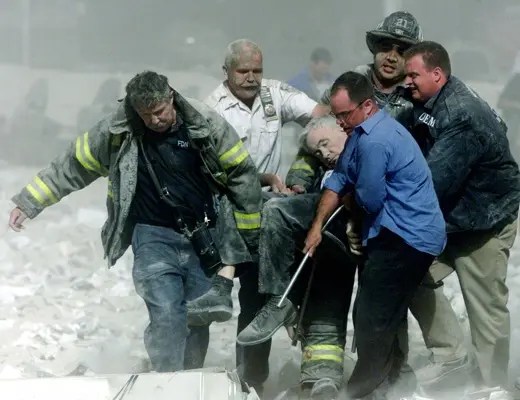
At the centre of the hospital was an enormous publicity board, it was used to communicate the tenants of mission effectiveness and Franciscan spirituality that had long ago led to the formation of the hospital. This space, rightly or wrongly, it occurred to me was mine. In my room I gathered together the largest sheets of card I could find, I got scissors, glue and every newspaper I could find. With great care I cut out each and every image of the suffering, wounded and dying people from in and around the World Trade Centre. I fitted them together into a montage that when assembled covered every inch of that massive Mission Effectiveness board. At its very centre I pasted the picture attached to this post. The picture is of Father Mychal Judge, a Franciscan priest who was chaplain to the fire fighters of NYC. On hearing the news that morning he had quickly removed his habit, put on his uniform and gone directly to be with his men and women. News footage shows him standing in one of the towers. The terror is visible on his face as his lips move silently in prayer and he prepares to minister to the injured, dead and dying. Sometime later another image is transmitted via the world’s media, it is Fr. Mychal who is carried out of the tower, his life given in the midst of unimaginable distress. By the side of this image I then pasted the prayer of St Francis.
Once in place, I stood back and looked at the finished montage, even I, its creator, was struck by its powerfulness. I was nervous, I did not know what reaction to expect. But I was equally aware that standing by the board and in view of the vision it created, I felt at home, I felt the sadness and horror it conveyed, and I felt it’s peace. I decided that’s where I would hang out. Word clearly spread and soon people from all over the hospital started to call by to look. In silence they looked, they wept, some gently touched the images, some thanked me and some went into the chapel and prayed. Some complained. The images, like Fr. Mychal, pulled no punches, it said it as it was. Humanity at its very worse and at its very best.
Humanity is seldom ‘nice’ we are, despite our intellect, primitive and awash with our needs, failings and vulnerabilities. We deny these things at great cost. When we don’t banish ours and others discomfort, when we allow ourselves to connect with our suffering and the pain of others. When we place ourselves in the way of risk, in the way of human tragedy and for the sole purpose of being together in all the shit that we ourselves so often create. Then it allows for something different to happen, for something different to be experienced.
By the time Fr. Mychal died alongside his people, he had seen terror and hell unfold on many occasions. As a gay priest in America at the height of the AIDS crisis he had held and kissed many who in the last days of their lives had been totally rejected by all around them. He had voiced and celebrated the joys of his and their sexuality and invited parents to be proud of their dying sons. No other voice in our world ever did this at that time.
The horror of 9/11 and the horror of the AIDS crisis are of course over but there will new horrors and some of us I guess will need to face such this very day. May we be able to meet whatever horror visits us as Mychal encouraged us to do so by how he was in the world – present, connected, vulnerable, flawed (as he often reminded us) but still willing to love. Father Mychal pray for us …
The breathtakingly awesome Netflix drama has rightly landed onto the platform of our collective attention. Its many glowing reviews are making sure it stays in our collective conscious. The reviews are repetitive in highlighting a whole range of notable scenes, immense acting talent and the social issues it raises.
Notable media commentators and including MP’s have added their voices of praise alongside concern. Even the odious Prime Minister Keir Starmer has once again nauseatingly ceased the moment to try and convince us that by watching it he is a man of the people, really? But amidst all this adulation something, one thing is not being mentioned, not being recognised, not being addressed. Humiliation.
The main character, the 15-year-old murderer ‘Jamie Miller’, I have met many hundreds of times. More precisely, I have met many hundreds like him and interviewed them in the secure estate just like it unfolded in the third episode. Like the forensic clinician in the drama my task has been, not so much to consider the symptoms but, to discover and consider the cause.
Violent and murderous acts are always an expression of something that cannot be said. Violent communication is nearly always the failure of words needing to resort to action. For Jamie and the hundreds of other young boys and older men like him, there exists within them experiences too awful to tell. For those who have witnessed these awful things occurring, such witnesses often become bystanders who are also unable to tell. All of this clearly repeated in the failure of this drama’s adoring witnesses to also not name the unbearable, the unthinkable.
The drama never uses the word humiliation, but in both words and visual action humiliation reveals its unique devastating ability. Father is not able to look at his son on the football field when sons’ ability makes him ‘less than’ in his fathers diverted eyes. The inability to look is repeated again in a moment of son’s desperation. This time it’s not only fathers’ eyes that are turned away but his whole body. There are indeed occasions in life when ‘not to be looked at’, when ‘not to be seen,’ when ‘to be turned away from’, when ‘not to be held’, when ‘to be rejected’ takes even the most resilient into the raw painful experience of humiliation.
When the raw painful experiences of humiliation cannot be spoken of then most surely, they repeat, replicated in a way that converts the pain into triumph. This is what Jamie Miller did and exactly at the moment when a new humiliation wounded him afresh.
But Jamie is not the only male experiencing the wound of humiliation and in so doing needing to pass it on. Father too it seems knows all about humiliation. Scene by painfully uncomfortable scene we see and hear how humiliation reduces this father until in foetal position he lays crushed on his son’s bed. Just prior to that scene we are invited to know about his humiliation with references to the past, his encounter with professionals, with his neighbour and even the wider public. Again, none of this is spoken of, it’s just enacted. Its internal impact on him only visible in his taught hands clutching the steering wheel of his work van. It is a profound suffocating even violent silence in that van which is the triumph seeking repetition. His victim(s) this time, his wife and daughter. It is the kind of silence by which those on the receiving end of it die a thousand deaths. So yes, it too, he too, is murderous.
Throughout, we were invited to witness the unravelling of this family in several dramatic moments. Truth is, real life, for most is not a continuous dramatic experience. The causal factors of life’s dramas tend to occur moment by moment, subtle, almost invisible, almost silent, often unconscious. But nonetheless they are happening.
As more and more of the family dynamics unfold, father is revealed to be a male who has perfected the ability to humiliate down to a fine art. Importantly, we also gain the impression that Jamie was not like his father and was more readily identified with his mother. Jamie, it seems is a gentle, shy boy, who is not assertive and has been bullied.
Many clues were given as to suggest that Jamie was more identified with his mother. In her he found a way to make sense of himself as different from his father. But to survive in a male dominated such an identification for a young male is not considered safe. To survive, the need becomes to relinquish identity with his mother and become as his father. What followed was Jamie doing just that. How many young males, we must ask, are required to do exactly this?
This excellent drama does reference misogyny but does so by placing it outside of those present. It’s placed in the external influence of incels, social media and not in its actual source, which is in fact for Jamie, much, much closer to home. It is this unhelpful projection that seduces us. Politicians, reviewers and viewers it would seem also cannot bear to acknowledge the deadly role humiliation is playing in the whole sad state of things. Far easier to get distracted by incels misogyny, because we are not like that. That’s okay then.
The effort to survive humiliation is seldom not a one-off event. Once residing in the psyche, humiliation will reappear and readily manifest again and again when its original conditions come into play. To be free of humiliation without a fully conscious recognition of its cause and impact is virtually impossible. Humiliation is a lifelong repetitive trauma for many, even though the original experience is long past. When humiliation occurs in our primitive years of development we tend then to be at the mercy of primitive forms of coping. The very nature of Jamies primitive coping did not wait long to manifest.
The final scenes of this drama indicate that the tragic consequences of humiliation have not finished for this family. Even when Jamies father is in the grip of experiencing humiliation for himself, all it seems he can do is seek to absolve himself and gets an unhelpful absolution from the women in his life. How often must that have happened? Lots I guess. The collusion by his mother with his father would not have been lost on Jamie. It rendered him alone and isolated in his humiliation. What use is a witness if they do not change the situation? do not make a difference? It’s not unusual for someone caught up in this parental dynamic to develop a rage against the non-protecting parent. No wonder, he becomes overwhelmed with frustration and rage at the forensic psychologist as he slowly realises that she too is not going to change his situation. She too then is made to experience his humiliation by the visceral delivery of his phlegm right into her face. Hardly anyone can escape humiliations deadly repetition.
We can all be invited into being witness to humiliation. Supermarkets, high streets, bar rooms, places of worship, schoolyards, garden centres, sitting rooms, kitchens, cars and work vans are all arenas where the shadow of humiliation is cast. In watching this drama, we were all placed in the position of bystander and, if the media reviews are anything to go by, all failed to name what we were witnessing. We called it all sorts of things, but we did not call it humiliation. The reason for this is perhaps revealed in this little-known fact; Humiliation in affect is clinically responsible for inducing symptoms of post-traumatic stress disorder equivalent to or, even more so, than the experience of child sexual abuse. In short, humiliation is an experience of the horrific and we don’t want to know.
If ‘Adolescence’ is really to be a success, may it put the issue of humiliation firmly on the agenda and more firmly into our conscious minds. Maybe then we won’t need to repeat it as often as we do and can be courageous in our knowing.
It’s not unusual for the media to misuse the term ‘chemsex’ by applying it to heterosexual drug use. This incorrect application of the term in misleading and disrespectful of the experiences of men who identify as Gay, Bi or Trans. Following more recent inaccurate media reporting I share with you the following conference address I provided in 2023.
This paper was first presented to the Metropolitan Police Service specialist crime conference in 2023 by Br. Stephen Morris fcc – Chemsex Crime Lead HMPPS. Operational Co-Lead – MPS London (Sagamore) and Consultant Forensic Psychotherapist
The first ever conference on chemsex crime we held just three years ago .That conference was called – ‘chemsex crime – it’s not what it seems’. Since then, many things have come to light, beyond expectation and imagination. However, what remains clear is that chemsex behaviour and chemsex crime is most certainly not what it seems to be, and it is more, much more than just about sex and drugs.
For successful investigation, for the court, to sentence appropriately and in order for the ongoing management of risk, dangerous and vulnerability to be effective, it is crucial for all involved in criminal justice to have a full appreciation of what makes chemsex so very different from other drug facilitated crimes.
Much of what I am going to say is inspired by a paper written by the pioneer of the recognition of chemsex within sexual health services David Stuart. David recognised a uniqueness that can easily be overlooked in territory where assumptions can easily be made. This is especially pertinent to us in criminal justice where assumptions can mislead and distort all that we require to evidenced and factual.
In short, chemsex sits in the uniqueness of gay sex and gay male culture. It is this fact alone that defines the chemsex phenomenon.
The use of drugs and their use in a sexual context is not so unique. Sexualised drug use has been around across the decades and within non-gay populations. But sexualised drug use does not constitute or define ‘chemsex’. No, it is the emergence of a range of uniqueness’s about gay sex, gay culture and gay socialisation that define chemsex behaviour, its motivating factors and makes it different to general sexualised drug use. The uniqueness’s I refer to are those things that more than anything else impact on the enjoyment of gay sex and gay sexual identity. Specifically include:
Firstly, societal attitudes towards homosexuality, particularly those attitudes that communicate as a disgust of the gay sex act, and a devaluing of gay sexual behaviour.
Attitudes that communicate disgust and render anyone ‘less than’ usually, if not always, creates, for those on the receiving end, immense inhibition, active oppression, and an implicit message that if you engage in such acts even when in expression of your core identity then you are ‘damaged goods’.
Second, cultural and religious attitudes towards homosexuality can and do equally inhibit the enjoyment of gay sex. Being labelled as sinful, evil, possessed, unclean, perverted, intrinsically disordered or worthy of a death sentence is not going to make anyone feel confident about how they express their sexuality let alone enjoy sex.
Indeed, when those messages are provided from early in life, which they often are, then are reinforced by powerful teachings and appear to be upheld by all those in your cultural / religious community, then gay sexual pleasure becomes psychologically impossible. It is significant that men, young and old, in the convicted chemsex cohort will often have been leading hidden double lives because they have grown up and still live where such belief systems and communities remain all defining of daily life. The hidden world of chemsex, free of such repression, is extremely appealing for these men.
Thirdly, the same effect of inhibition can also be the consequence associated with unaddressed historical trauma and stigma of the AIDS epidemic. A whole generation of gay men have the lived experience of sex for them being linked to witnessing repeated scenes of the horrors of illness resulting in death. Seldom did anyone experience a ‘good death’ caused by AIDS. AIDS related deaths were painful, messy and with an horrific level of suffering.
For gay men of my generation throughout the late 80’s and well into the 90’s it was not unusual, whilst still in our late teens and early 20’s, to attend 3-4 funerals a month whilst also being confronted by the prospect of our mortality. Many from this time did not have time to grieve or process what it meant to know without doubt that sex, gay sex, equalled death. Again, the effect; sexual pleasure became psychologically inhibited or impossible.
In 2023 (2025) this issue has not gone away and despite few AIDS related deaths, the issue still does impact on the ability of many to enjoy gay sex. The onset of PTSD symptoms is not uncommon with those receiving a HIV positive diagnosis. Just a few years ago as an honorary psychotherapist with the Terrance Higgins Trust my whole case load was made up of men who had developed full blown PTSD within months of being diagnosed as HIV positive. Again, stigma, fear, anxiety, a change in one’s sense of self massively impacting on the ability to enjoy gay sex.
In addition, gay cultural attitudes themselves can also impact on the ability to enjoy gay sex. The arrival of the ‘hook up’ apps and the growth of smart phone technology has changed the face of socialising and dating. It has impacted on the understanding and expectations of gay sex, romance, love, and relationships and not always in a great way.
Related to this is the emergence of a gay specific rejection culture associated with gay tribes, body shape, fitness, age, race, status, sexual performance expectations and yes, penis size. I’ve seen and heard reported many time the opening chat line not being as one would expect “Hi what’s your name?” but literally “How big is your cock?” – Objectification writ large. We know only too well in criminal justice the horrendous consequences of such objectification and the reduction of an individual to nothing more than a sexual object.
Yes, clearly if you tick all the boxes and ‘fit in’ there is no problem. If not, if you are found wanting then it is rejection indeed. The pressure to market oneself to be successful within that culture is therefore difficult to avoid and without doubt, all impacts on the ability to enjoy gay culture and gay sex. In contrast, it is important to recognise that the chemsex scene is all welcoming, there are few boxes to tick, few requirements to meet.
These are uniqueness’s about gay culture, gay identity and the experience of gay sex that are not popular to talk about. Few mention them or would even struggle to articulate them. They are of course experiences that in the main take us into the territory of vulnerability and shame. The very things that the human condition is hard wired to avoid and at any cost. Things that, if there is a quick fix or something to assist in making avoidance easier, the ‘buy in’ is very attractive indeed.
Involvement with drugs for many immersed in chemsex behaviour is not seen as the problem. Truth is, chemsex is experienced and then thought about as the solution, the tool by which gay sex is no longer impossible but very possible and immensely pleasurable seemingly without cost. For many, chemsex is how societal inhibitions and oppression can be overcome.
Another contributing factor that shapes the uniqueness of chemsex behaviour is a range of pre-existing vulnerabilities.
We cannot ignore the fact that early life experiences are often very different for those who identify as gay, bi or trans. Many assume that because the rainbow flag flies high for a few weeks each year and people around the country dance to the beat of Pride, then everything is well with the world and that liberation has been hard fought for and well won. This reality may be true for some and certainly is for more than across previous decades. But it is not the full picture. You only need study the Stonewall Health Report published every three years to see the cost of the struggle many experience for not being heterosexual.
The rates of depression, anxiety, psychosis, self-harm, suicide, alcohol, and drug and alcohol dependency are all far higher than the within the heterosexual population. All is not well. In addition, people are still disowned by their parents, rendered homeless at a young age, bullying, loneliness, isolation, hate crime and other forms of homophobic abuse all remain common experiences. Such experiences internalised during formative years seldom end well. They too undermine the confidence and esteem essential for the development of a pleasurable sense of self, sexuality, and enjoyment of gay sex. The journey into the self-medicating world of chemsex can and often does start very early indeed.
These are the uniquely gay, historical, and cultural experiences of gay sex that define chemsex. The combination not found within other populations who may engage in transitory sexualised drug use.
David Stuart writing in his paper on the origins and importance of the word, highlights thatthe term ‘chemsex’ itself is another unique feature specific to gay culture. It came into being and emerged from those who were involved in the early use of GHB and Methamphetamine within the sections of the UK gay scene. It was applied specifically to those drugs and reflected how these drugs were markedly different from the drugs previously seen in the scene for some time. The word brings together recognition of both the chemicals the core components of behaviour and what we have seen more recently a behaviour that has become a way of life.
Over time the chemsex scene, chemsex behaviour, has evolved far from the version that first existed. For some it may start the same, ‘chilling out with people you know’ but the reality is that if you enter the chemsex scene in 2023, you will quickly be involved with a cohort of people who have been involved for five years or more. What started out as a one weekend a month ‘treat’ evolved into a fortnightly treat, then weekly and then daily. Until what you see is that lives are lived in a chemsex bubble. Time devoted to planning, partaking, recovering, and then repeating.
It is in this cycle that needs are seemingly met, connection is experienced, disinhibited sex is achieved, confidence, esteem is temporarily enhanced. In the chemsex bubble all that was problematic with identity, all that got in the way of experiences of connection and sexual pleasure no longer exists. It’s all-consuming ability an indicator that physical dependency on the substances may or may not be the issue, but addiction to the context, this particular way of getting needs met most certainly is.
With high rates of re-offending in this cohort, with high rates of re-call to prison, breaches and serious further offences all reported, it is crucial that we recognise why those involved go back for more and that this is understood by sentencers, is embraced in licencing conditions and risk management plans.
Being aware of what motivate and informs engagement in chemsex behaviour goes some way to assisting us in understanding why chemsex behaviour exists, what it offers and the needs it meets.
Chemsex is played out in a secretive hidden world where it’s harms and vulnerabilities are minimised – normalised. It has become a subculture appealing to those with genuine authentic need and appealing to those who seek to abuse and exploit.
We know that any context allowing for the conversation of powerlessness into triumph can so quickly become an immense source of dangerousness for the individual and collectively. This goes someway to account for the high incidents within this cohort of victim and perpetrator present and being acted out within the same person. Those involved presenting a serious risk of harm to both themselves and to others.
All crime enables access to power, especially for those where life has rendered them powerless. When criminal behaviour is harnessed to address power imbalance then its degrees need constant adjustment to maintain its defensive ability. Hardly surprising then that in the cohort of those convicted of crimes in a chemsex context we see very extreme levels of harm and destructiveness. This fact alone tragically defines the evolution of chemsex crime.
In conclusion, Chemsex crime is clearly then not just about sex and drugs. As a behaviour it brings together some incredibly powerful aspects of the human condition all uniquely associated with gay sexuality.
The crimes in this context manifesting an equally powerful combination of risk, dangerousness and vulnerability.
The cases, like the issue, are complex and multi-layered requiring much of us tasked with protecting the public. If we are to respond effectively to this public protection issue, then the uniqueness of chemsex and the uniqueness of gay sex must be our constant reference point, informing each stage of the process of justice and rehabilitation.
Frank Sinatra’s ‘I Love You Baby’, once heard seldom forgotten and of course for all reasons good. However, I didn’t expect to hear it late last night in the cold wind and rain as I stood waiting for a taxi in the remote part of the country where I live.
But unmistakably there it was filling the night air. It was being sung by two teenage boys, no older I guess than 16 who, word perfect matched the rendition of Frank himself being streamed on one of the boy’s mobile phones.
In the almost total darkness, they seemed oblivious of me the only other person present. At some point I looked up to show my appreciation and saw that they were in fact singing it to each other. As the song progressed into its iconic showband sound of its era, the boys started to dance, together and for each other. Rhythmic, tender, intimate and most definitely with love. No adolescent piss taking from these two.
It came to an end. But clearly their love of each other didn’t, they remained held in each other’s arms.
Me, I remained deeply moved. I had spent the evening with a friend, engaged in our own intense way discussing sexuality, love, intimacy, the priesthood and celibacy. We were recalling experiences across four decades. So, these two very young confident men, without them knowing it, joined the evenings conversation and brought it to a beautiful conclusion. Just as ‘I Love You Baby’ is a song not possible to forget, I will never forget them…
Out of the darkness, wind and rain, A taxi eventually arrived and with love they shared it with me….
A very prestigious awards ceremony has just taken place. It happened at the Dorchester Hotel in London. I know about it because I have only just, in the early hours of the morning, returned from it. I had no option but to attend and I have thought long and hard about the wisdom of my sharing this but, given that it won’t receive any other publicity, I feel compelled. It was you see an award ceremony held in my name. It was ‘The Stephen Morris 2024 Resilience Awards’ and what a night it turned out to be!
More accurately; what a dream it turned out to be! I have literally just woken from the above dream. I don’t remember my dreams very often. When I do it is because they are significant and usually indicate that my unconscious is serving me well.
At the awards ceremony, I was presenting the awards myself. My role was to call onto the stage from the vast audience those being honoured for the role they had played in causing resilience. I called their name and described their particular contribution. I handed them the award and they all formed a long line across the glamorous and sparkling Dorchester stage.
What a line-up of complete bastards filled that stage. For each person present was someone from my life who, in one way or another, had visited upon me some form of immense sorrow, sadness, hate, abuse, mistreatment, accusation, bullying, lying or other form of less than kind treatment. Others represented situations or occurrences that at some point in my life had taken me to the depths of despair; loss, illness, depression, anxiety. From childhood to the present day, the complete shit shower was all there.
One by one they were all handed their award and one by one I thanked them for making me what and who I am today. For providing me with the insight, wisdom and knowingness that helps me each day to stand and face with resilience any new award seeker who may come my way. Sometimes, it would seem that there is an endless supply.
I woke from the dream amused and disturbed. Most of those at that ceremony were people I, for good reasons, have chosen not to have an ongoing part in my life. It was not nice to see and hear them again. It was scary, anxiety provoking and yes, painful. But of course, I cannot deny that their awards were anything less than genuine. That the consequences of their past behaviours and being in my life have been anything less than authentic. To deny that would be to deny who I am today and I am very happy with exactly that.
Would I have ever imagined ever giving each of the shit shower an award? No! of course not. Only in my wildest of dreams!
In and at the time of our adversities, our endurances, our storms, our shit showers, our sufferings and our unwanted experiences, it is almost impossible to know what will be left for us and of us once they end.
Only with hindsight, reflection and a willingness to know our history can we begin to recognise such. Having survived, something unimaginable emerges. Something beyond the awfulness is born, shapes us and enables us. That something I know now for certain is, resilience. Difficult to describe, to see or hear but powerfully present in its experience and in its residing.
Would I want a repetition of the experiences that I have seemingly just awarded? No. Do I value and need my resilience? Yes! Yes! Yes! Such is this paradox of my life. Your life. I guess you too can have an awards ceremony and I guess that it won’t be very different from mine. If ever there was a time to have one surely, it is now!
Once people are aware of my work, at some point the question ‘Have you ever met anyone that you thought was truly evil?’ will be asked. My confident answer often surprises and on occasions causes anger. No. In the 40 years plus span of my work with prisoners and with offenders in the community, not even one of them have I experienced as evil.
Truth is, in my lifetime, I have only met one person who I would describe as manifestly evil, and that person was not a prisoner they were a professional who worked in a prison. In that person, I witnessed over time a level of malevolence, intended cruelty, destructiveness, and cunning all operating in the service of her own highly toxic self. I did not experience this person as ill, or as personality disordered. I could not recognise a pathological issue; it was what I can only describe as a spiritual issue. I would never wish to encounter it again.
I have of course met many people who have carried out immense destruction and inflicted immense suffering. No matter how the media and others choose to label them, I have always been able to find genuine pathology, genuine deprivation (often not material) and a myriad of inhumane experience that has been repeated and re-enacted within the context of their crimes.
Often, when what has been done to someone is so horrific it cannot be put it words, then it is nearly always communicated by action, by behaviour. So precise at times is this re-enactment that even the smallest of facts are included. For example, when assessing evidence of those who have committed repeated acts of sexual crime against children, it’s not unusual for their victims to be a direct mirror of themselves at the age of their own victim experience. The crimes themselves taking place at the same time of day, month, week as that of their own victim experience and with the choice of victim looking as they themselves looked at that age. What the unconscious stores and then repeats is indeed often horrific, but it is seldom evil.
Enactment of the crime in question can also manifest in the forensic setting with me. Some years ago, I was interviewing a man who had committed a series of sexual assaults against people responsible for caring for him. Due to a ‘disability’ he claimed he needed help when going to the toilet. Once he got his carer into the confined space of the bathroom, in an aroused state he would expose himself to them and force contact with his penis. Halfway through my interview with him, he said he needed to use the toilet and would need me to assist him. Despite being in the middle of recording a graphic account is his offending, I got up and proceeded to help him to the bathroom. It was only as I was about to go through the bathroom door with him did a consciously realise what was happening and was able to stop the process at that point. Interestingly, he was able to completely manage going to the toilet without any assistance at all. This experience was a powerful learning of just how possible it is to be rendered unconscious and taken into someone’s repeated enactment. It then came as no surprise to me when, later in that same interview, the man disclosed for the first time that when a child he had been repeatedly sexually assaulted in the confines of a bathroom, where no one came to help him.
My experience is not that rare in forensic clinical settings. Unconscious dynamics get repeated in one way or another all the time. You can feel it, sense it and as described, sometime actually get drawn into it. Unsettling as it may be, I have never experienced this as evil, but more so deeply human. A reminder that we are all vulnerable to unconscious repetition, especially when we are not able to think about something.
Evil, the works of Satan, spiritual attack and spiritual warfare are most certainly not uncommon to me. But I have seldom experienced those things in my contact with the criminally convicted.
The follow-on question I’m often asked from ‘have you ever met an evil person? is usually about fear. Do you ever feel frightened when meeting people have raped and murdered? No, those who have murdered and done similar terribleness seldom induced fear in me. Truth is more likely; I have often been able to see myself in them and on many occasions totally understand why they have done what they have done. In fact, many surprise me that they have never done worse.
But referring back to that one evil person I met. The one who was a professional working in a prison. That person was a totally different experience and devoid at every level of any goodness. So yes, I have met with evil, just not as often as people would expect or like to think.
My experience of ‘the sacred’ in life has not been found in the cathedrals, monasteries, friaries or parishes of the institutional church but most vividly, tangibly, in places more readily associated with darkness, mess, brokenness, pain and horror. Let me say this more directly; the prison landings, police and court cells in which much of my work takes place are the places where I often witness more compassion, concern and humanity than I ever have in the chronically nice religious institutions that also feature in my life.
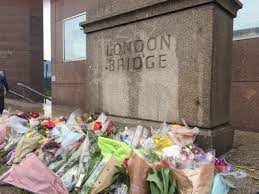
On Religious Brothers Day, I and my fellow brothers working in sites of suffering across the world celebrate the paradox of our place in the world and in so doing I recall an incident, a horror, that unfolded on London Bridge some years ago now.
Time and time again life, if we live it fully (for me living life as a religious Brother enables me to do just that) takes us into the uncomfortable territory of paradox. The point in the human condition where opposites come together and demand of us that we think outside of our comfort zones and with new perspectives. No matter how many times we are called into this process it never seems to become any easier. For more than three decades now, my daily work has provided me with this challenge.
I trained in forensic psychotherapist and work as Operational Lead for Project Sagamore for HMPPS and the Metropolitan Police. At the heart of forensic psychotherapy is the belief that all offences are a symbolic communication of something that cannot be said and that no one is ever just their offence. It is these tenets that I embrace when advising courts, parole boards and police investigations on risk, dangerousness and suitability for treatment.
In the context of my work, I have met many hundreds of men and women each presenting me with their own unique version of the paradox and in particular the paradox that sits at the heart of that which we would consider ‘good’, ‘bad’, ‘evil’ or ‘mad’. I am forever grateful to the men and women who consume my daily thinking and in so doing constantly challenge me to go beyond myself. Repeatedly, it is they who take me into the heart of the experience of the passion of Christ and at the end of the day the only certainty I come away with is that it is never clear cut. It is always paradox.
Paradox in the criminal justice setting is always hidden from public view. My work takes place in a separated, secret world. That fact alone acts as a constant reminder that I am connected to much that many do not want to think about. It is the stuff of life considered only on partial terms by a polarised media or distorted beyond recognition by the latest Netflix crime drama. It is also a world where there is much history of the crucifixions of life. Where contemporary versions of the passion are repeated and often with little evidence of any resurrection.
I could cite many examples that would enable me to share my work but none quite like that which occurred in the winter of 2019. A major incident on London Bridge propelled not only the paradoxes of criminal justice into the wider public’s thinking but also, and with little recognition of course, the very themes of the passion of Christ; forgiveness, wholeness and redemption.
The incident I refer to unfolded at a conference on rehabilitation. A radicalised young man launched a knife attack on two of those attending and killed them. As the violence continued it spilled out onto the bridge and others from the conference became involved.
In the media coverage that followed, two men were brought to our attention, both are deserving of our continued reflection. One is a man previously convicted of murder who, caught up in a new drama acts to save and preserve life. The other, a man who has committed his young life to helping change and rehabilitate similar offenders and who then loses his life at the hands of one he may well have sought to serve.
In the days that followed, the media found many words to express a response in relation to the later. But their struggle to find the language that could comprehend that someone serving a life sentence for murder could also be equally involved in the preservation and saving of lives was only too apparent.
In this example, it seems that extreme events are never really as extreme as we need them to be. We prefer ‘extreme’ to mystery. We know what to do with ‘extreme’. We make it ‘good’ or ‘bad’ and our small, limited mind can then cope. What our thinking struggles most with is the reality and fact of wholeness.
The fact that someone, that we, are forever a sacred mix of all that we easily label ‘good’ or ‘bad’ and that the resultant manifest wholeness is for the most not extreme at all. My understanding as a clinician of faith tells me that wholeness is not one or the other, it is always both. It is always a paradox.
The events on London Bridge made public the reality of the paradox within the human condition. For once, the very private world that I inhabit was revealed. Something more occurred, something more got played out for all to see and that something seriously is demanding more than our conditioned view of our world and each other. It is demanding we think beyond the initial superficial reaction and not be so afraid of ourselves and the mystery of what wholeness really looks like. Because wholeness is much more than we care to think about.
Wholeness also requires us to think about the third man who featured on the bridge that day. For it is he that brings into sharp focus the reality that none of us are ever a reduced to one dimension. We are all that incredible mystery of immense light, immense dark and many dimensions. At that moment in time, it is the third man who manifests the part of him capable of ultimate destructive behaviour. But, like it or not, that destructive moment is exactly just that, a moment. It is not the full picture and is certainly not the full reality or extent of who he is. The third man was once a babe in arms, just the same as the other two men. He will have also travelled through life being attached to and loved by others. Being seen and known for many things worthy of praise and respect and nothing like the part of him now witnessed by the world. He too, just like the rest of us, was a manifest paradox in much need of a manifest passion.
Br Stephen Morris fcc
(This article was first published in ‘Passio’ Lent 2021)
Today, 30 April 2025, marks 26 years since the nail bomb attack on Admiral Duncan in Soho. Three people lost their lives and many were seriously injured in what was the third attack by a neo Nazi who also attacked the black and Indian communities. His hate was directed at people he considered ‘other’ and it seems more important than ever to not forget these hate crimes, those who died and were injured.
Before specialising in sexual crime, I would occasionally be asked to assess the risk and dangerousness of those charged with hate crime offences. It was always interesting to identify what had influenced the development of hatred in their lives and to the extent that it has manifested in often murderous behaviour. It was always horrifyingly poignant for me when defendants would quote distortions of christian teaching or church doctrine as a means of justifying their actions. Many did.
It is a chilling fact that when so called christians condemn LGBT people, in the myriad of ways that they often do, they are providing the fuel of hatred which others take up and later manifest in violent and deadly crime. The blood of LGBT people is not just on the hands of the guilty perpetrator, but it also extends to the hands of those who sow hatreds seed.
The laws concerning hate crime do not go far enough. They need to be extended and used against those who use faith as a vehicle of hate, for in clinical assessment terms they are indeed ‘very high risk of harm’.
Virginia’s Roberts Giuffre’s tragic death by suicide does not sit in isolation. It’s what can happen to victims of sexual abuse when justice is not denied and when there is a constant denial of reality by those around you. Professionally, I’ve witnessed many times this toxic impact of repeated denial. It renders people insane and to a point where they just want it to stop. So they stop it.
When abusers of all kinds do not face justice, when they are not held to account and when they fail to take responsibility, the outcome for their victim(s) can be the same. Healing cannot take place when denial remains.
Today, as every day, there will be other men, women and children who have been abused who in the absence of justice will die by suicide. This horrendous fact is one reason why I will never tire of speaking out about abuse and how we all have a responsibility to know about those who abuse, to understand how abusers operate and crucially to speak out about it, as indeed Virginia courageously did.
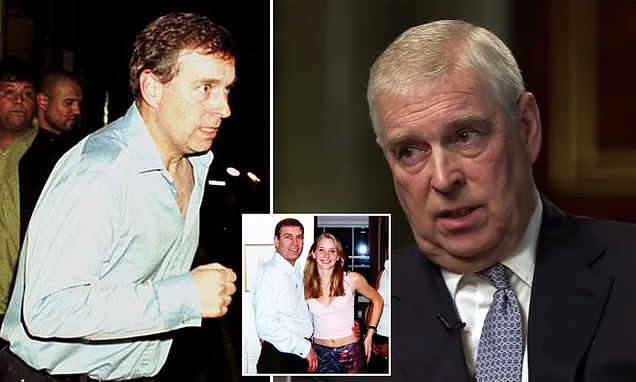
As a forensic clinician with over forty years specialist experience of treating perpetrators of sexual crime, it was not difficult for me to recognise many indicators of guilt in the now well known interview with one of Virginia’s abusers.I wrote about it at the time and in honour of Virginia I share it again … I called it ‘Think Like Andrew’ …..
Once upon a time there was a Prince called Andrew. Some very horrible things were said about this Prince. In response, the mother of the Prince, the Queen, commanded him to go on national television. The Prince and his mother made a long list of all the things he needed to say to defend his reputation. This was not difficult as his mother had needed to do this before when other men in her family, including the prince’s uncle, had found themselves in similar situations.
The prince however remained worried and started to cry; “Oh Mummy, the lady saying the horrible things about me has also got a photograph of me looking guilty as fuck and sweating like a real sex offender”. The Queen responded immediately by telling her son not to worry and just to tell the people that, as a Prince, he was unlike anyone else in the world as he could not sweat. On hearing this the Prince was so excited he started to say out loud all things he had secretly told himself over many years. For the Prince had always known that what the lady had said about him were in fact true. But now it did not matter at all. The Queen had spoken and just like magic he was above the law.
Indeed, the stuff of fairy tales. That is exactly as it seems when hearing or reading the first statements made by someone guilty of committing a sexual crime. The story and stories they tell themselves are often beyond belief. To make any sense of it, to see through it, to expose the truth that hides behind it, to bring about justice, then the task is to enter the world of the fairy tale and to think, for a time, like the storyteller. It was this process I had in mind when I heard the sweating Prince telling his story and the public debate that followed. It prompted me at the time to invite others to ‘think like Andrew”.
Thankfully, we have become familiar with being able to think as victims or about victims. As crucial as this awareness is it plays only a small role in preventing incidents of sexual abuse and bringing those guilty of sexual crimes to justice.
To prevent, recognise and respond to sexual crimes we need to be able to think like the predator, abuser and paedophile. No wonder we shy away from this uncomfortable task. Despite my clinical training those who I have learned the most from are the men and women who have commissioned sexual crimes. Assessing their risk, listening to their stories and reasons over many years I now know what to expect, their agenda does not change or develop much, although I must remain ever vigilant to still hear the unthinkable and even after decades, I do.
So rather than debating Andrew, why don’t you do you own assessment of his story. Watch it again. Just using his public statement how many of the following thinking traits can you identify. You may also do this same assessment on those you know or associates who appear to collude with others whose behaviour has been supportive of any kind of abuse; domestic violence, emotional, psychological abuse and sexual abuser – often we are too good at making excuses for those we should be holding to account.
This obviously not a full assessment but it illustrates the self-talk, justifications and denials of those who need to be cause for concern. Each is followed by a typical statement I have heard literally thousands of times.
EXCUSES “I couldn’t see what I was doing”
BLAMING “She / He gave me the come on” “my partner
wouldn’t have sex with me”
PITY “I was having a bad time, I needed cheering up”
JUSTIFYING “It’s always happening to me, when people do it to
me, I don’t mind”
REDENFINING “It’s not abuse, its flirting”
LYING “I did not do it”, “I was not there”, “I don’t do things
like that”
UNIQUENESS “It’s a gay thing, it’s part of the scene, we behave
like that to each other”
ASSUMING “She was in a nightclub so therefore she wants it”
MINIMISING “It’s a laugh, a joke, its friendly fun, much worse
could happen”
VAGUENESS “I just brushed by her – I wasn’t thinking”
GRANDIOSITY “The law is mad and out of date, I can do what I
want, I’m not oppressed”
VICTIM BLAMING “She / he made me do it”
VICTIM STATUS “This whole thing is ruining my life”
SPLITTING “I’m a good person and would never harm anyone”
“I haven’t got a bad bone in my body”
PUZZLEMENT “I just don’t understand this consent thing”
HELPLESS “I didn’t know what I was doing, I was
very overwhelmed”
MY WAY “I Joke all the time, it was a joke, it’s how I am”
AVOIDANCE “The alcohol / drugs / chems made me do it”
DISTORTION “I was being honourable, loyal to my friend” “I was helping him / her” “I was educating him / her”
There are of course always new versions, new justifications, new distortions, new lies. “I cannot sweat” was a new one on me ….