• Not Planning Another Year

    Taking notice, observation, listening with ‘the third ear’ defines a large part of my working day. The forensic settings of prison, probation and policing are full of professionals like me all ‘taking notice’ in a hard-earned way. I seldom apply this way of being when not at work, unless that is when something really pulls me in, grabs my attention. It does not happen often. Whilst having lunch last week it did.

    Having ordered, I gazed around the small tearoom and immediately noticed that a couple sitting opposite had the same diaries. I tried to dismiss the observation, reminding myself I was not at work and that the observed total match was of no relevance at all. Too late, I was already seduced. So not only did I look, but I also started to listen…..

    Over the next 20 minutes, it became apparent that this couple were not only to share matching diaries for the remainder of the year but that much, if not all the year would be shared between them as well. Week by week, weekend by weekend, month by month, they planned and plotted their lives. Life. Their lives, I continued to hear, were planned moment by moment into a schedule of; walks, camping trips, festivals, long weekends away, weeks away and in August a whole month away. Oh, and the occasional mid-weekday off. The prospect of which seemed to excite them greatly. The planning also included modes of transport and where they would stay, B&B, hotels, tent and Airbnb.

    I don’t think I acknowledged the arrival of my lunch so aghast was I that we had gone from Easter to Christmas and yes, next new year, all within thirty minutes or so. Maybe they were just free thinking? just having ideas? But no, just as I was preparing to leave, out came a laptop and the whole planned year started to be transferred from matching diaries into a calendar spreadsheet. As I left contemplating at least three different versions of what my afternoon may look like, in contrast, this couple had the whole of the year set in stone.

    My lunch time experience stayed with me. The couple, their new paper diaries and the not so new laptop floating in and out of my mind for the remainder of the day.

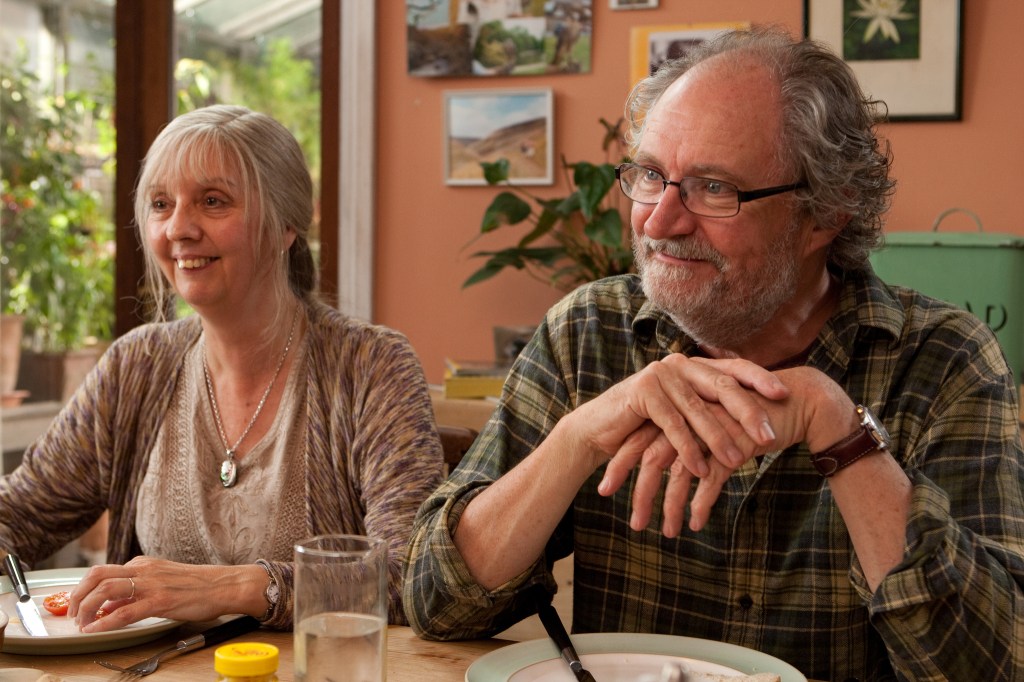
    Time, its planning and passing, also featured in a dream I had the same night. It was a fun dream, and I was sad when my waking up brought it to an end. In the dream I, along with all the other characters, was part of Mike Leigh’s 2010 film ‘Another Year’. There I was in every scene, written in and participating. I was very much at home in all the scenes as, for whatever reason, I always associate Mike’s films to be set in NW5, I don’t know if they are or not, but for me ‘Another Year’ fitted well into all I associate with NW5 and the fact that in real life, other years of my life, 14 of them in fact, were lived there.

    In the film, Tom (Jim Broadbent), a geologist, and Gerri (the wonderful Ruth Sheen) a counsellor, are an older married couple who have a comfortable, loving relationship. The film observes them over the course of the four seasons of a year, surrounded by family and friends who mostly suffer some degree of unhappiness. Watching the film and observing my dream, the seasons were beautifully experienced by Tom and Gerri’s tending to their allotment. The seasonal fruit and veg of their toils moving us through another year of their lives and life itself.

    In my real-life Kentish Town years, I didn’t have an allotment, but I did have Parliament Hill. As the years passed, season by season, I looked down from that awesome vantage point. The span of London made miniature by the hill’s height. Me, the season, London and all its people carried moment by moment, year by year through our lives.

    The lives captured in ‘Another Year’ are skilfully revealed to us. One by one, except for Tom and Gerri, we learn of their life’s dreams and plans. Equally, we learn of their disappointments, dashed expectations, let-downs, trauma’s, the unexpected which comes knocking on all their doors and yes, we witness what the unplanned in its various guises visits upon them. The film’s theme, life’s passing of time, is also communicated in more subtle ways. Tom on a London building site examining layers of London clay, each sample holding centuries of London life. Gerri trying her best to get her new reluctant counselling client Janet (Imelda Staunton) to talk about the years that run through the core of her life. Occasions of birth and death are also weaved into the story.

    Tom and Gerri are about the total opposite as you could get from their fellow characters and indeed from my real-life lunch time couple. Tom and Gerri, without any obvious planning, allowed themselves to be carried by the seasons of their allotment and the seasons of their life. In doing so, they brought to the world around them a sense of security, stability, steadfastness, and peace of mind. Tom and Gerri were at one with themselves and with life. For it seemed that they had learned the art of being in the moment, to have faith in the unknown, to be willingly accept experiences of not knowing and to find happiness in the mysteries of life including the unfathomable depths of messy humanity manifest in those they loved. Life without a diary or spreadsheet was a joy to behold.

    I’m not sure when planning the life out of life became popular. I guess it’s been around as long as uncertainty and insecurity. Delusion also runs as a thread through time memorial and informs many if not all of acts of planning. A whole industry has developed to support it from ‘Filofax’ to my café couple’s shiny new diaries. Time planned it seems offers certainty and the secure base many crave. Time planned and planning time is popular.

    What are we to make of this craving for certainty? The longing for a secure base I guess commences the moment we fall out of our mother’s womb. We yearn sometimes consciously, more often unconsciously, to get back into that symbiotic state. Impossible. It can take much to reach a realisation of that, not to mention an acceptance of that.

    From the moment we fall out into the world we continue to fall into life. Many will recall the trauma they experienced witnessing those falling from the ‘Twin Towers’ on 9/11. Later, I worked with many who developed full PTSD having seen those incidents of falling. Yes, traumatic in itself but also because there is a personal identification. We may not have fallen from the ‘Twin Towers” but we all know what it is to fall and the not knowing if we will be held, rescued, or if the ground will save us. This example alone tells us something of the primitive that lurks behind the need to plan the life out of life.

    I am reminded each day that life is bigger than myself. We say every morning in the Divine Office that God is a mighty God, that he holds the depths of the earth in his hands, that the mountains as well as the sea and the dry land is shaped by his hand. For me this is a daily reminder to surrender to the act of falling. It’s an invitation to bin the ‘to do’ list, and to know that falling into the present moment of not knowing is really all I can do. All I can know. It a most alarming and at the same time deeply comforting way to start each day.

    Chögyam Trungpa, puts it much clearer than me or the Divine Office when he says, “The bad news is your falling through the air, noting to hang on to, no parachute. The good news is, there is no ground”.

    I don’t know how the year will unfold for the couple in the café. Truth is, despite all their planning, all their attempts to put ground beneath their feet, neither do they. Fact is, time planned, more often than we would care to acknowledge, flies in the face of faith, strips life of its mystery and at its worse chokes the life out of life.

    Br Stephen Morris fcc

  • My Difficulty with the Sixth Commandment

    ‘The Sixth Commandment’ is an exceptionally written drama, matched in its excellence by the skilful portrayal of its main characters, particularly by Ann Reid and Timothy Spall. I’m in awe. As the episodes unfold, we are taken into the world of a real-life crime story. A murder committed by Benjamin Field. The acted persona of Benjamin is accurate to perfection. Eanna Hardwicke manages to, look, sound, and move just like the real Mr Field. Again, I am in awe.

    As crime drama goes this is not your highly charged gruesome sensationalist indulgence. It’s. not ‘Line of Duty’. It is calculated, measured, dignified, chilling, understated even. Just like in fact the real-life Benjamin. He most certainly was all those things. But that is where my awe ceases. Because we’re not getting the full story, the full picture, that I understand is intentional. The writers have made very clear statements that they didn’t want the focus on the drama to be on Benjamin. The reason for this; respect for the victims and their families. I get that and it disappoints me.

    No victim of murder stands in isolation. Much like there is no such thing as ‘just a baby’, there is always a baby and a mother. There is also never ‘just a victim’ there is always a victim and a murderer. Whilst the human condition can get its head around mother and baby, it struggles to hold both victim and murderer in mind. This separation, this splitting, may enable a kind of comfort, but it is never helpful and is particularly unhelpful for the understanding of murder, what we need to do to prevent it and how best to respond to those who do.

    A life’s work with those who have murdered and on occasions the victims’ relatives, has never failed to keep me curious. My asking ‘why?’ and ‘how?’ has never ceased. What must be now hundreds of cases, have all provided, eventually, their own unique answers to these questions and in so doing I’ve been able to make meaningful contributions to the management of risk and the task of public protection. Key learning in this process has been recognition of the fact that focusing on the victims’ experiences tells us very little that we do not already know. It is to the behaviour and into the mind of the creator of victims that we must go. This task of course is much less attractive and is without the reward of making us feel good about ourselves.

    For the last six years leading on the criminal justice response to chemsex crime for London, it has meant a lot of murder has come my way. 16 victims created by 12 perpetrators. The 4 victims of Steven Port will come easily to mind. But what about the others? No, most will struggle to name any of the other victims of chemsex context murder and certainly not those who murdered them. When it comes to murder, we are in fact very selective in who and what is remembered, this despite the assertion that it matters terribly. This selective remembering, this selective knowing, this selective recall, and as reflected in the decision of those responsible for ‘The Sixth Commandment’ to only focus on the victim’s story does us no favours.

    For the armchair detective, there is an excellent documentary on the investigation into Benjamin. ‘Catching a Killer ‘– Ep 5 ‘Diary from Beyond the Grave’ (Channel 4). It’s an inspiring example of highly professional and compassionate policing. But like ‘The Sixth Commandment’ it only provides part of the picture. There are however some teasing glimpses that hint at the fuller story of Benjamin. His exquisitely polite behaviour in the custody suit. His stretching exercises on being remanded and his request to the custody Sergeant for reading material delivered in the manner of requesting a copy of something by Socrates from his local library. ‘You’re in a Police Station sweetheart’ I think I said to my television screen. ‘You’ll be lucky if they can conjure up a stained aging copy of the Sun’, I continued amusing myself. His request however is met with equal exquisite politeness and that starts to reveal to us something of the bigger picture. It’s a great, example of offence paralleling behaviour, and it worked.

    Fact is, if our fascination is to be more than indulgence, is to be more than ‘concern’. If our fascination can be harnessed to play a role in the prevention of crime, in the management of risk and in public protection then Benjamin deserves a drama all of his own.

    The real-life drama of Benjamin would have started at least three generations before he was born. That’s the number of generational influences we all hold within our unconscious processes. From his birth there then would be a range of biological, environmental, and psychological factors that combined to enable the development of a problematic personality structure or structures. It is these that played out and communicated themselves not just in his murderous behaviour but in all the ways he went about it and indeed in all the ways of his lived young life.

    Since sentencing, Benjamin has not stopped being Benjamin. Within our custodial estate he continues to be exquisitely polite, highly intelligent, charming, helpful to others and he will continue to be all of this and more on his release. Therein lies his dangerousness and the vulnerability of many.

    It is the ‘how?’ and ‘why?’, on release, that becomes crucially important for the management of risk and public protection. ‘Risk is Everyone’s Business’ is the title of ongoing training in this important task for officers within HMPPS. My conviction is however that ‘Everyone’ also needs to include the wider public including you. Benjamin committed murder in plain sight, as most people do in fact. It is that fact that needs to inform our awareness and thinking.

    Benjamin is on my radar in the context of my current specialism, chemsex context crime, I and others have assessed him as ticking enough indicator boxes to be considered what we refer to a ‘chemsex nominal’. Suffice to say, from thinking about the whole picture of Benjamin the chemsex context could be very appealing to him on release and for all the reasons of power, risk, and vulnerability it encompasses. We need to be prepared and we need to think.

    Holding someone in mind who has murdered, thinking about them is the only way anyone can come to an understanding of the ‘why?’ and ‘how?’. It is thinking about them that repetition can be managed, and the influence of causal factors minimised. I’ve often wondered if the Benjamin’s of the world have any comprehension just how much thought is invested in them and of the sort that goes way beyond news headlines, documentaries, and television dramas, no matter how good. Problem is that this thinking tends to happen after the event. Benjamin’s now known behaviour started long before he committed his crime and he’s not so unique. There will be other Benjamin’s building up to the commission of a similar offence right now. Only by us all having a mind for all of this will there be any chance of them being stopped or in the case of the Benjamin we know, being prevented from doing it all again.

    As for, ‘Thou shall not kill’, not always as, as well as easy as perhaps we would care to think, but I guess we, as well as Benjamin all have a responsibility.

    Br Stephen Morris fcc

  • A Letter to Lucy

    Dear Lucy

    I’m writing to say how sorry I am that we won’t get to meet. Some years ago, we would have perhaps met in HMP Holloway. The Lifer Unit there was very well resourced with pets and everything! sadly it’s now no more. Demolished. Although no longer in HMP Holloway, I’m still working with people who have killed in a similar way to you by weaponizing drugs, surprisingly they are exclusively men and within the context chemsex, not nursing or hospitals I’m afraid. Anyway, I thought I would write, just to let you know the sort of things we could have talked about.

    It’s a shame we won’t get to chat as I also some questions that I think you may have found refreshing. Unlike it seems the world and its mother, I would not need to ask, ‘How could you murder those babies?’ The act of murder is, I’ve come to understand, really very simple. I get it. Your own method in fact, easy as pie. No, my main question would be, why so many?

    I’m also wondering if you got as bored as I did with people being so shocked about the fact that a nurse could murder? and that you didn’t look like someone who could murder? Gosh people are so predictable. Yawn.  

    O Lucy!  you have made an awful lot of people so very angry indeed. But here’s the thing, they don’t appear to be angry about the fact that you have murdered many, but rather than you don’t look or sound like someone who would. One journalist. Judith Moritz, I think it was, wrote columns about you and clearly could just not get her head around the fact that at no point have you fulfilled whatever image it is that she holds in her mind of what a murderer looks like. Her lengthy piece for BBC News ended in despair. “I just don’t understand” she says. Bless. But seriously though, it’s about time that Judith Moritz, her other journalist friends, and the many despairing others stood in front of a mirror and realise what they see reflected back is what someone who murders looks like.

    Lucy, the fact that you were a nurse and chose your nursing context and environment in which to kill comes as no surprise to me. I would go as far as saying, if one wishes to commit murder, it’s a perfect role and hospitals are the perfect setting I’m more shocked in fact about you getting found out, caught. Mind you, it took them quite a few years.

    Despite all the interest in crime fiction, thrillers, real life crime genre and the like it does seem that the collective response of disbelief, in relation to yourself, reveals very little imagination.  Think nurses. Think doctors. Think hospitals. These roles and institutions clearly sit in our minds in a very particular way. A way in which we are heavily invested and need to maintain. There are reasons for that investment. It offers the illusion of comfort. We need nurses, doctors, and the places we go to when vulnerable with sickness to be safe, kind, caring, empathic, often to a level that is superhuman. So much so, we end up referring to the personnel as ‘angels and the buildings as sanctuaries of healing.  My guess Lucy is that you knew this fact very well indeed. Which makes me want to ask another question if I may; At what point did you decide to use your context, your ‘angel’ identity to transfer your own imaginations into reality?

    Yes, you and I Lucy appear to have a shared knowledge about the idealisation of those involved in health care and how such idealisation is born from the primitive fears and anxieties of our own vulnerability. In vulnerable situations, we need to make nurses ‘Angels’ and doctors ‘Saviours’. Anything less is just too risky. For those on the receiving end of such powerful projections that is a lot to live up to. It’s not just murder that challenges this delusion. Just look at how quickly adulation changes to denigration when nurses and doctors dare to go on strike.

    Lucy, I want to go back a bit if your able to; Can you recall for me the very first moment you put on your nurse’s uniform. Tell me what did it feel like? How did other people respond to you? What did their reactions make you feel about yourself? Does power have a role to play here? Narcissism perhaps? Definitely even.

    My guess is Lucy, what you are likely to have described in response to my curiosity , would be very similar to what other nurses have told me.  What you and they recognise is the associated unconscious dynamics that until now have been a powerful part of your working life. This is especially so in relation to your very particular setting of the Special Care Baby Unit. Here, even more dynamic influencing factors would have been at play. Infant vulnerability confronts us with our very own. Not surprising then that such a unit and all those that work on it again need to be seen and thought of as deeply caring, dedicated, able to banish pain, suffering and able to achieve survival. Tell me how aware of those beliefs of others were you?  what did that make you feel? And what did you think of those who had those expectations of you? Sorry, a lot of questions I know. 

    Lucy, what I’m going to say now is related to what we have just recognised and again, I think this is something that you have known and understood for a very long time. Please correct me if I’m wrong.  But with all those parents and others so deeply invested in seeing only positive things about the unit and its staff, then the other part of the until and its staff does not get recognised or even thought about. I’m talking about the not so benign aspects of the unit and of hospitals in general I suppose. Because also present, perhaps even more so, are the realities of pain, risk, suffering, disappointment, not knowing, loss, sadism even, death even. Gosh that is heavy, and one can start to understand, just a little as to why the delusional belief of ‘angels’ becomes so important.

    Look Lucy, to be honest, I thought it was quite unfair that some media and some people who looked at you in court then went on to describe you as cold, unfeeling, disconnected. There was no recognition that for you, your fellow nurses, doctors, and managers there is a massive need to remain distant, not to show feelings, to even cut feelings off. It’s something you would have learned to do very early in your career. It’s how you and clinicians manage to survive the full reality of working in a hospital. Had I been in court or if I’d written your report, I would have pointed out that outside of stressful situations away from the unit and indeed away from the court room you would and clearly had the capacity to feel fully, connect with friends, show emotion and to engage well with others. There was loads of evidence of such fact. But your career required you for long periods of time not to think and not to feel. For you, like many other health care professionals it had become a default way of being.

    I think it would be helpful to both of us if you gave some time to thinking about the process I have just described and then write it all down. When did you start to be able to control your feelings by numbing them, but not feeling? Did this start at work or had you achieved the ability to do this before, maybe a long time before? Then describe for me the occasions when you did allow yourself to feel, when you connected, when you expressed ranges of emotion. Then please, if you would, describe for me the range of feelings you experienced when bringing about the deaths of the babies in your care. I know that won’t be easy, so perhaps do that starting with the first one and then work your way right up until the last. In that way we might start to see how the feelings you were experiencing changed over time. Usually, I would very much want to be with someone when they did this task and I’m sorry I’m asking you to do this alone. Maybe I’m being over concerned for you. Revisiting the moments of the babies deaths need not be horrific for you, those moments in particular may have been moments of extreme pleasure, immense powerfulness, omnipotence.

    I hope by doing the exercise I suggest above that it will help us to think about you more wholly. I’ll be direct. I know some have labelled you as having a psychopathic personality structure. I’m not convinced. I think there may be other issues at play. You gave me a clue when you made the arresting officer adjust the seat in the police car because of recent knee surgery. Such was your concern, it made me think of your narcissistic needs. We all have them, but to varying degrees and yours, in that moment, seemed quite acute. I’m cheeky to say that without even doing a full assessment – apologies. Oh yes! There was one other thing that made me think the same. Your hair. You’ve changed its colour but not its style. You still wear it as you did in your school photograph. I’d love to ask you about that.

    In closing, I just want to indicate where ongoing discussions would go if we were to work together. Childhood. Yes, that old chestnut, or more precisely, parents. Both your own and those of the babies you killed. Yours were present in court for the whole trial, this is highly unusual. Was this out of their love and concern of you? Was it that they hoped to learn something about you? or about themselves? or was there presence a sign of knowing? A knowing about you and themselves and the three of you together. How did you experience their presence? Was it Supportive? Oppressive? Controlling? Accusing? Shaming? Or all these things? and what about their presence throughout your life, how was that? How will it be now? You also formed attachments with the parents of the babies you killed, and it does seem that you went out of the way to do this, to include them in some way. Simply Lucy, was it about the babies or about the parents? If I’ll be bold and again correct me if I’m wrong. I think it was about the parents, yes?

    Finally, I just want to recognise that your sentence is the loss of liberty, that, and nothing else is the punishment. The lifer progression process is not and should not be a punishment. I think you will come to know that. Although life will be very different for you, you will have a life and you’ll need to live it as fully as you can. You’ve created enough loss. Enough is enough.  I say that to all the lifers I work with.

    Your sentence is also about protecting the public. But truth is, that responsibility sits with the rest of us and I’m convinced it starts with us surrendering our immensely dangerous need for angels.

    Br Stephen Morris fcc

  • Lest We Forget – The 206 Male Victims of Reynhard Sinaga

    Being a victim of rape and sexual crime is not a competition. When media coverage on such crimes is partial and does not reflect the whole picture however, it becomes an important justice to name a truth.

    Over the last few, days headline news in a wide variety of media has reported on the case of Zhenhao Zou a 28-year-old found guilty of drugging and raping 10 victims. He is thought to have at least 40 more.

    This recent case is not dissimilar to another quite recent case that of Reynhard Sinaga who was convicted of 159 sexual offences of which 136 were rapes. Further evidence indicated that he had 206 known victims.

    Both of these extremely dangerous men have an extraordinary range of common factors, which even a superficial reading of the cases reveals. There is one factor however that is different. All the victims of Zou were women. All the victims of Sinaga were men.

    It is not possible to ignore the vast difference in the victim statistics. The media coverage on Zou however has done just this. Zou is being portrayed by some as the ‘most prolific rapist’ and by others who hint of wider picture by referencing him as ‘being among the most prolific rapists. This distorted reporting erases the male victims of Sinaga and in so doing plays directly into the massive problem we have in the UK which is the failure to recognise, name and be pro-active about the vulnerability of men, especially when that vulnerability is linked to men’s experience of rape and sexual assault.

    I have worked with many hundreds of rapists and sexual predators. I worked on the Sinaga case for several months both pre and post sentence. I come to know his thinking well and like many others who commission crimes against men, he was very well aware that the targeting of his victims would be relatively easy, that they would be unlikely to report their victimisation and would quite likely not be believed if they did. All because of the fact that they were men. He was right. Many of his victims did not report and were only discovered because he had filmed them. Many were never identified, and many exist that we do not know about, of that I am certain.

    The case of Zou has been and remains in the spotlight now for several days. That was not the case with Sinaga. It was headlining news on conviction in some media only. This failure to recognise and name male vulnerability comes at a very high cost. Perhaps the most horrendous cost is the continued silencing of men who experience sexual crime and evidenced in the fact when research tells us that on average it takes men 25.6 years before they tell anyone about their experience. Important then to recognise that for the year 2022 the crime survey identifies 275,000 sexual assaults against men. What would that figure be we must ask if men were not so conditioner to remain tragically silent so for so long.

    I say all this whilst working to highlight the failure to recognise, investigate and respond pro-actively to the vulnerability of men who go missing. In a significant number of cases, the police response in particular can only be described as beyond woeful. It is markedly different, in the most unhelpful of ways, when compared to the approach applied when women go missing.

    I am not competitive. All victims are victims and their individual experienced cannot be devalued statistically.  But all victims regardless of gender are deserving of justice and for male victims of sexual crime that, if the media is anything to go by, is absolutely not happening.

    Br Stephen Morris fcc

  • Beginnings and the Grief of Endings

    Beginnings and the Grief of Endings

    I only really like the first lines of Minnie Haskins poem ‘God Knows’, more commonly known as ‘The Gate of the Year’. I recall it along with many others I guess at the close of each year. But its poignancy for me is more associated not with the opening of a new year but with the closing episode of the 70’s television series ‘A Family at War’.

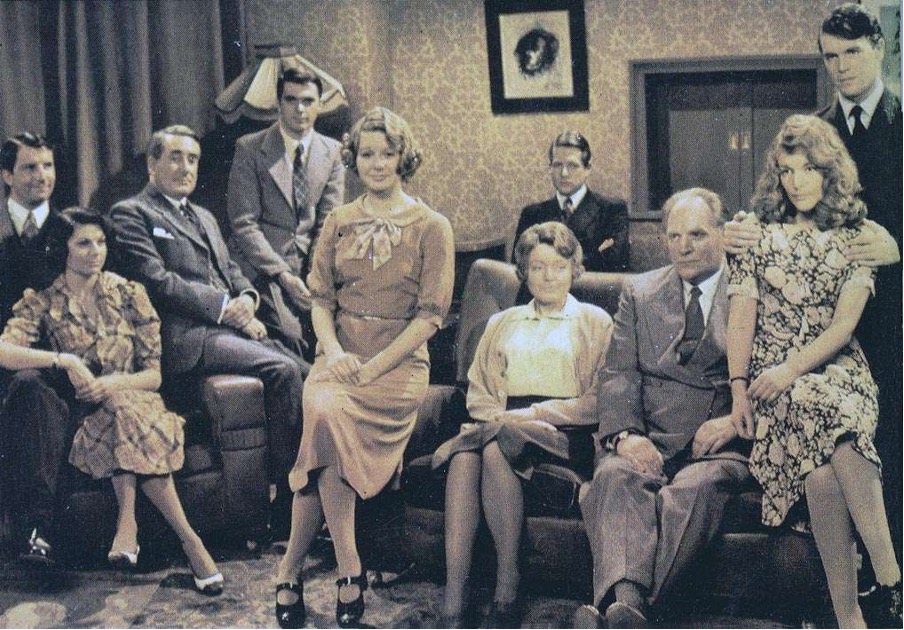
    The series, based in Liverpool, told the story of the Ashton family living through the war years. It aired for 52 episodes and took its audience into the family experiences of the external war and the almost equally disturbing dynamics of the internal wars within the Ashton family.

    As a child, it was an intense experience to watch it unfold week after week, yes because of the skilful writing and also because there were few scene changes. Typical of its day, most of the drama seldom ventured beyond the Ashtons living room. The wider world was however brought to that living room, as it was to all our homes, by the medium of the wireless.

    In the closing moments of the last episode, we are again back in the Ashtons living room. The family diminished and depleted. The past echoes around the empty walls in the voice of King George reading to the nation as he did in 1939 Haskins poem “And I said to the man who stood at the gate of the year ….. “ The vulnerability of that moment in time poignant in the timbre of his voice.

    Endings are a vulnerable time for the fact that we usually know what is ending but seldom do we know what is beginning. ‘A Family at War’, from it’s very beginning, like life, was all about endings and what they do to us. How sometimes we emerge better from them and other times less so. But episode after episode, as in the days of our lives, what we witnessed is how endings change us. Endings, one by one, took hold of the Ashton family and changed it forever. After an ending life is seldom ever the same.

    The endings and the vulnerabilities of the Ashtons were not unique to them and were not confined to the experience of war. No, far from it.

    Endings for us all in one way or another are defined by loss and the vulnerability that meets us in our response of grief. No matter the nature of the ending or the cause of loss, the deeply human response of grief is forever the same. 1939, 2023 and 2024 separated by time but not by internal experiences of sadness, sorrow, diminishment of hope and yes, life rearranged.

    Whatever endings greet us at the gate of the year. Whatever our griefs and vulnerabilities, may they, may we, be met with peace of mind and a hope in the breaking of a new day.

    And I said to the man who stood at the gate of the year:

    “Give me a light that I may tread safely into the unknown”.

    And he replied:

    “Go out into the darkness and put your hand into the Hand of God.

    That shall be to you better than light and safer than a known way”.

    So I went forth, and finding the Hand of God, trod gladly into the night.

    And He led me towards the hills and the breaking of day in the lone East.

    Br Stephen Morris fcc

  • For those that know about suicide ….

    Suicide, this powerful act of leaving our world, is no stranger to me. It has been the means by which people have left my life in the context of my work and on occasions in the ‘non work’ places of my life. Just this week, a young man I worked with a few years ago appeared on my screen as part of an intelligence search I and colleagues were conducting. The report contained the observations of how the ambulance personnel had found him on being called to his address. To use John Donohue’s words, I once again was faced with “the sudden wall of dark” and since have found myself remembering. So for Nick and all those that know about suicide here are John’s words of blessing in full ….

    As you huddle around the torn silence

    Each by this lonely deed exiled

    To a solitary confinement of soul,

    May some small glow from what has been lost

    Return like the kindness of candlelight.

    As your eyes strain to sift

    This sudden wall of dark

    And no one can say why

    In such a forsaken, secret way,

    This death was sent for …

    May one of the lovely hours

    Of memory return

    Like a field of ease

    Among these gravelled days.

    May the Angel of Wisdom

    Enter the ruin of absence

    And guide your minds

    To receive this bitter chalice

    So that you may not damage yourselves

    By attending only at the hungry altar

    Of regret and anger and guilt.

    May you be given some inkling

    That there could be something else at work

    And that what to you now seems

    Dark, destructive and forlorn

    Might be a destiny that looks different

    From inside the eternal script.

    May vision be granted to you

    To see this with the eyes of providence.

    May your loss become a sanctuary

    Where new presence will dwell

    To refine and enrich

    The rest of your life

    With courage and compassion

    And may your lost loved one

    Enter into the beauty of eternal tranquillity,

    In that place where there is no more sorrow

    Or separation or mourning or tears.

  • “Cunts Corner”

    “Cunts Corner”

    ‘Cunts Corner’ was the name, given by the women in HMP Holloway, to an area of the visiting hall where women would sit if their visitor did not turn up. The term communicates powerfully how it must have felt sitting there. The expectation and significance of a visitor when serving a prison sentence is immense. When that visitor does not turn up and your surrounded by another 100 women whose visitors have tuned up imagine for a few moments how that would feel ……. ‘Cunts Corner’.

    But such feelings of difference, being made ‘other’, outcaste, unwanted, alone, being made ‘less than’, rejected, devalued and judged are not confined to the women who once sat alone in HMP Holloway. Political, Governmental, social, religious, family, professions, work places, educational establishments, schools, indeed all institutions can hold well established ‘Cunts Corners’. They can be recognised, discerned, detected by the kind of statements they make, policies they endorse and laws they ignore. Just a few weeks ago and not for the first time, it was the Anglican church that thought it totally acceptable to make statements affirming the oppression and the devaluing of large sections of society. ‘Cunts Corners’ clearly exist in all areas of life.

    ‘Cunts Corners’ also exist within the LGBT community and especially within the commercial gay scene. If you look ‘right’, sound ‘right’, wear the ‘right’ clothes’, have the ‘right’ body shape, are the ‘right’ colour, are the ‘right’ age, are the ‘right’ HIV status, go to the ‘right’ places and have the ‘right’ size cock then don’t worry you will never see ‘Cunts Corner’. Fail on any one of these and your heading right there!

    ‘Cunts Corners’ exist every time a ‘less than’ culture is allowed or ‘less than’ statement is made. Such statements can be made and heard far from home and very close to home. Nobel bishops and dukes may make them, but sometimes it is our friends that make them, our partners and those we loved and respected. It does not matter who makes them for the consequences are the same.

    Let me be clear, as I think many fail to realise the full impact of such statements. Every time such statements are made new waves of hatred flood towards people of difference. New waves of bigotry are given permission and new waves of hate crime encouraged. Whoever it is that thinks it possible to make ‘less than’ statements, such arrogant and self-righteous statements banish beautiful, loving, creative souls to the hell of a ‘Cunts Corner’. This in 2025 is happening and it is the shameful reality.

    Let me continue to be clear. If you have remained silent in the face of such statements and manifest hatred, then you too have played your part in the creation of such places and the denigration of another.

    I was five years working in HMP Holloway. Throughout that time, I witnessed immense compassion for those women who were made to feel ‘less than’. I often witnessed a caring and sharing that I seldom see in many other settings and rarely see in the gay scene. As long any individual is made to be ‘less than’, as long as any individual is relegated to a ‘Cunts Corner’ then it is a reminder there is much to do and much not to be silent about. The next time you witness a ‘Cunts Corner’ in operation, call it out! speak it out! Enough is enough!

    Speaking out needs only to be a small effort. But small efforts, as Dorothy Day reminds us can have a massive impact “People say, what is the sense of our small effort? They cannot see that we must lay one brick at a time, take one step at a time. A pebble cast into a pond causes ripples that spread in all directions. Each one of our thoughts, words and deeds is like that. No one has a right to sit down and feel hopeless. There is too much work to do”.

    Br. Stephen Morris fcc

  • My Sainted Mother. No! Not Always

    Mother’s Day’ for many, is not a happy time and is for more than we would like to think, a deeply traumatising time. Perversely, I would love to turn the front of Estella’s book ( see image below) into a Mother’s Day Card. It would not sell. Such a card would challenge the massive investment which goes into maintaining the saintly Madonna archetype of ‘mother’. Try challenging this and you soon discover just how heavily defended the associated beliefs are. For those who have endured and traumatised by a monstrous mother, society seldom offers a reference point.

    There are those on ‘Mother’s Day’ that cannot take resource in denial. There are those each ‘Mother’s Day’ who know from witnessed or actual experience that mothers do sexually and physically abuse, that mothers do torture and murder their children and that mothers can inflict over many years sadistic emotional and psychological abuse. The number of mothers convicted of such crimes is not as insignificant as is often argued, but since when did minimal numbers lessen the lived experience of even just one victim.

    Denial for the victims of a mother’s crimes is always a double trauma with its own particular symptoms and destructive impact on life. For mothers who have committed crimes against their children, then the denial that surrounds their existence is nearly always a triple trauma; the unhealed trauma that has informed their own harming behaviour, the trauma of what they have done and the trauma of themselves not having a reference point. During the years I worked in HMP Holloway, I met many mothers caught in this immensely painful trinity.

    Remaining wedded to the saintly image of motherhood, even on ‘Mother’s Day’ serves no one well.

    Br Stephen Morris fcc

  • Radical Vulnerability

    Following a violent criminal attack at Westminster, the media were so lost in their sensationalist reporting, they failed to invite any useful analysis or reflection. Rather than relying on the BBC to stimulate my thinking, I turned to my own experience of crime and my training in forensic psychotherapy. Whatever type of offence I am confronted with my starting point is always the same, ‘What is the meaning of this?’

    The real meaning of a crime, all crime, can be identified by the one aspect of it that characterises its manifestation and its consequences. Knowing the real meaning of a crime is absolutely crucial is being able to respond effectively to manage the associated risks and particularly in our response to prevent further crime.

    The real meaning of a crime is often not the one we would prefer to acknowledge. Often the real meaning is one that connects us with discomfort or truths that are hard to acknowledge. This applies to both the perpetrator and to victims. To discover the real meaning and purpose of a crime we need to ask what is it that the crime in question is communicating? More importantly, what is its unconscious communication? If we can answer this question, then we have an opportunity to address causal factors and reduce further risk to victims. In some instances, further repetition of the crime can be stopped completely.

    The crime of terrorism is a good example. The unconscious meaning of terrorism is not so readily available for assessment. But if we look at the various components of a terrorist act, it does not take long before it is possible to identify the one characteristic of it that gets repeated again and again by all involved. That defining characteristic is the experience of vulnerability. Terrorism, for its perpetrators, supporters and victims is all about vulnerability and not in fact about terror.

    The motivating factor for a terrorist act is vulnerability. The motivated terrorist has perceived that something they hold dear or indeed that they themselves are under threat, under attack, that they are vulnerable. It is the perception or the actual realisation of this that informs the defensive response of a, bombing, shooting, stabbing, kidnap or other atrocity. The causal factor is vulnerability, the immediate impact is vulnerability, and the ongoing consequence is vulnerability.

    It is discouraging therefore, to recognise that the ‘solution’ being pursued by the state appears to be missing this point altogether. The states in their response has decided to focus on radicalisation. Radicalisation is not the cause of terrorism, it’s a symptom. Much emphasis is being placed on the radicalisation of young people rather than the vulnerability that they wish to escape from.

    In our developmental year’s we are acutely aware of our vulnerability. It is during these years we learn to do everything possible to deny, avoid and banish our experiences of vulnerability and in so doing we search for, find and employ anything that will keep it at bay. Drink, drugs, sex, religion all present radical alternatives to vulnerability and enable us to experience comfort, omnipotence or both.

    In denying our vulnerability we do ourselves a massive disservice, we stop the growth of resilience. Consequently, we are then forever at the mercy of our defences rather than discovering the strengths of our resilience. It is a sobering truth that all defences give the impression of working for us, but sure enough they always end up repeating the very experience we sought to avoid in the first place.

    As long as the response to terrorism continues to focus on radicalisation the real cause will go unaddressed. The young men and women attracted into ‘radical Islam’ are no different to any young person attracted into any cult. The emphasis of the response needs to be on enabling young people to tolerate their vulnerability, to value their vulnerability and to discover a healthy resilience to the vulnerabilities of life.

    The current emphasis on radicalism is further misses the point in its lexicon. Even the term ‘radical’ is unhelpful, in my youth anything described as radical appeared attractive indeed, it implied the opposite of vulnerability and therefore was worth investment. Again, so often when the truth within the unconscious is not recognised repetition occurs.

    In my work with people who have committed crime contrary to popular belief, I see massive change. but only when they can start to be honest and real about their vulnerability. Does that happen when I talk about their crime? No. Does that happen when I talk about their faults and failing? No. Does that happen when I try to judge them or punish them? No. It happens when I start to talk about love and fear and hopes and needs and compassion. Those are the occasions murderers, rapists, bank robbers and yes, terrorists, break down and cry and allow their vulnerability to be seen and heard. Yes, they make sure they stop before stepping out onto the prison wing, but it’s a start and once that process is started it seldom fails them and certainly does not fail society. Because from that place of embracing vulnerability flows empathy. Initially yes, it is for themselves then it soon becomes for others. Evidence for me that focusing on the cause and not the symptom brings change. Now, that is radical!

    Br Stephen Morris fcc

  • Our Lady of the Lipstick Kisses

    For over a decade I found myself at the heart of a particular suffering which was far outside the acceptance of many. At the time Ireland was going up in smoke and its people living in England became the target of politically informed oppression and hatred. The resultant suffering of those involved was one that no one wanted to know. In the divisions that characterised those times, fear reigned. As is with any experience of oppression, the need to survive meant for many that much of life and particularly life’s suffering becomes secret and hidden.

    I am unable to remember this time without recalling the many mothers of prisoners I have had privilege to know across decades of my work. Mothers were at the centre of this war visited upon them by the English governments. They were not in the news, they were hidden from sight but, they were there.

    In the early 80’s, I and many others witnessed the depth of agony as ten mothers watched their sons of Ireland die on hunger strike at the hands of the British state. Torture.

    Then there were the mothers I stood with in the Old Bailey over the years that followed. Witnessing them as they looked across at their sons and daughters receiving sentence in the dock, exiles in a foreign land.

    Closer still, there were those mothers too who filled my home and my life whist they endured the wait for freedom of their children, imprisoned until the miscarriages of British justice were laid bare. All of these mothers I remember. The first photograph in this post is of some of those mothers.

    The other photograph in this post is of an almost life size statue of another mother, The Mother of God, Mary. Our Lady. She lived with me across those years and still does. This beautiful French statue has over time observed many moments of despair meeting with moments of hope. I know that because her feet are covered with lipstick! The lipstick kisses are from those decades I now recall, when Sr Sarah and I provided a home for the many relatives of Irish prisoners during their visits to loved ones in the British goals. During those years, if you were Irish in Britain at this time you were outcast and, much like with the Muslim community now, no one wanted to know. It was in this context that ‘Our Lady of the Lipstick’ as I now call her, came to symbolise so much.

    The lipstick kisses remain as a symbol of those dark years and in particular indicate part of the story that is seldom recognised or told. As with the loved ones of most prisoners’ families, their story is characterised by despair and hope. I would see such etched on the faces of the mothers and wives when they would arrive as complete strangers on my doorstep. Many of them had suffered the humiliation of ‘guilt by association’ manifest in detention at the ports, strip -searches, harassment and racist abuse by the bucket load. Their fear was manifest across the few days they would stay with me. The despair of the present and of the future, what would become of their loved one? and indeed what would become of them? These were the questions behind every thought and word they uttered. But in all of that, the kisses to Our Lady still occurred and over the years her feet slowly became covered in the kisses of despair and hope.

    As is so often in the stories of humanity, the raw experience of paradox reaches deep into our being and takes us, despite our protest, into territory far from any comfort we have ever known. Many others in our world are in such a place right now. Many without a cultural or spiritual resource of resilience to call upon and no feet on which to place kisses.

    But regardless of lack of resource, regardless of lack of resilience, all experiences of paradox provide, if we dare to go there, a space of middle ground. The coming together of seemingly polar opposite experiences create, at their very meeting point, something different and it is often exactly that space where we need to go. It is in that middle space where resource is to be found.

    The space created by the paradox of despair and hope we can call – acceptance.

    Trauma, be that of a Irish prisoners relative in the 70’s and 80’s, the trauma induced by a virus in 2020 or a war against evil in 2025, provide to all those involved experiences of despair and hope.

    Despair and hope are the defining features of specific trauma. I was privileged to gain a clinical specialism year at the Tavistock Clinic Trauma Unit many years ago. My mentor, Dr Caroline Garland, taught me that in response to traumatised clients our task was the re-installation of hope. When life experiences have eroded the supply of hope, like a mineral, it requires the right environment, care and attention to enable it to grow again. Her powerful analogy has stayed with me and is a constant reference point for me, not only in relation to my clinical work but in all areas of my life and in my connection with others.

    Throughout life there is always much need for the re-installation of hope. We all need to work hard in the transformation of our own and others despair into hope. The process can and in many ways must start now and as indicated, it starts often by going, screaming and kicking maybe, to the place of acceptance, the acceptance of now.

    It often would seem that we are afraid to hope. I know for sure that the kisses of hope planted on the feet of Our Lady were made in deep anguish with many tears. Such a place is where we come to acceptance, it’s never easy and what follows is unique for us all. But what I also know for certain is that the place of acceptance is always, always, always the place of peace. Even though we may not know that at the time.

    Br Stephen Morris fcc